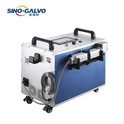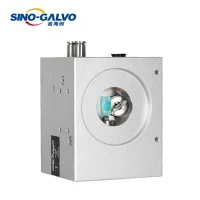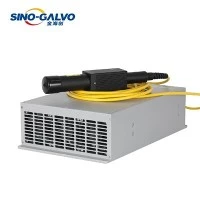


UV laser micromachining has revolutionized precision fabricating in the gadgets and restorative industries. This cutting-edge innovation harnesses the control of bright light to make complicated structures and components with unparalleled exactness. The preferences of UV laser micromachining are complex, advertising prevalent accuracy, flexibility, and effectiveness compared to conventional fabricating strategies. In the electronics division, it empowers the generation of progressively miniaturized and complex circuit boards, microchips, and sensors. In the medical field, UV laser micromachining encourages the creation of life-saving gadgets such as stents, inserts, and surgical devices with uncommon exactness and quality. As we delve deeper into the preferences of this innovation, we'll explore how it's forming the future of electronics and restorative gadget manufacturing, pushing the boundaries of what's conceivable in these critical areas.
Precision and Versatility in Electronics Manufacturing
UV laser micromachining has become an indispensable tool in the electronics industry, offering a level of precision and versatility that traditional manufacturing methods simply cannot match. The technology's ability to create extremely fine features and intricate patterns has enabled the production of increasingly complex and miniaturized electronic components.
One of the key advantages of UV laser micromachining in electronics is its capacity to work with a wide range of materials. From polymers and ceramics to metals and composites, UV lasers can process diverse substrates with high accuracy. This versatility is particularly valuable in the production of multi-layer printed circuit boards (PCBs), where different materials must be precisely machined and integrated.
The non-contact nature of UV laser micromachining is another significant benefit. Unlike mechanical drilling or milling, which can introduce stress and damage to delicate electronic components, UV lasers can ablate material without physical contact. This results in cleaner, more precise features with minimal heat-affected zones, crucial for maintaining the integrity and performance of sensitive electronic devices.
In the realm of flexible electronics, UV laser micromachining shines. It allows for the creation of intricate patterns on thin, flexible substrates without compromising their structural integrity. This capability has paved the way for innovations in wearable technology, flexible displays, and conformable sensors.
Moreover, UV laser micromachining enables the production of high-density interconnects (HDI) in PCBs. These microscopic vias and traces are essential for the miniaturization of electronic devices while maintaining or improving their functionality. The precision of UV lasers allows for the creation of vias as small as 10 microns in diameter, far beyond the capabilities of mechanical drilling.
Revolutionizing Medical Device Manufacturing
In the field of medical devices, UV laser micromachining has emerged as a game-changing technology, enabling the production of intricate, high-precision components that were previously impossible or impractical to manufacture. This advanced technique has found applications in a wide range of medical devices, from minimally invasive surgical tools to implantable devices and diagnostic equipment.
One of the most significant advantages of UV laser micromachining in medical device manufacturing is its ability to work with biocompatible materials. Polymers like PEEK, PET, and PTFE, as well as metals such as titanium and nitinol, can be precisely machined without compromising their biocompatibility. This is crucial for creating devices that can safely interact with the human body.
The precision of UV laser micromachining is particularly valuable in the production of cardiovascular devices. For instance, coronary stents, which require intricate mesh-like structures, can be fabricated with exceptional accuracy. The laser can create ultra-fine struts and complex geometries that enhance the stent's flexibility and performance while minimizing the risk of restenosis.
In the realm of neurosurgery, UV laser micromachining facilitates the production of microelectrode arrays and neural probes. These devices require extremely fine features and precise spacing to interface effectively with neural tissue. The non-contact nature of laser processing ensures that these delicate structures are created without mechanical stress or damage.
UV laser micromachining also plays a crucial role in the manufacture of microfluidic devices used in diagnostics and drug delivery systems. The technology can create precise channels, reservoirs, and mixing structures on a microscopic scale, enabling the development of lab-on-a-chip devices and advanced drug delivery implants.
For implantable medical devices, surface modification is often necessary to promote tissue integration or prevent unwanted biological responses. UV laser micromachining can create controlled surface textures and patterns at the micro and nano scales, enhancing biocompatibility and device performance.
Future Prospects and Emerging Applications
The future of UV laser micromachining in the electronics and medical fields is bright, with emerging applications pushing the boundaries of what's possible in manufacturing and device design. As the technology continues to evolve, we can expect to see even more innovative uses and improvements in both industries.
In the electronics sector, UV laser micromachining is poised to play a crucial role in the development of quantum computing hardware. The technology's ability to create precise, nanoscale structures is essential for fabricating quantum bits (qubits) and the intricate circuitry required for quantum processors. This could potentially accelerate the realization of practical quantum computers, revolutionizing fields such as cryptography, drug discovery, and financial modeling.
Another promising area is the integration of UV laser micromachining with additive manufacturing techniques. This hybrid approach could enable the production of complex 3D electronic structures with embedded circuitry, opening up new possibilities for device miniaturization and functionality. For instance, this could lead to the creation of more sophisticated and compact IoT devices or advanced sensors for autonomous vehicles.
In the medical field, UV laser micromachining is expected to contribute significantly to the advancement of personalized medicine. The technology's precision and flexibility make it ideal for producing customized implants and prosthetics tailored to individual patient anatomies. This could dramatically improve patient outcomes and quality of life across a wide range of medical conditions.
The development of biodegradable medical devices is another area where UV laser micromachining could make substantial contributions. By precisely controlling the structure and composition of biodegradable materials, it may be possible to create implants that serve their purpose and then safely dissolve in the body, eliminating the need for removal surgeries.
UV laser micromachining is also likely to play a crucial role in the emerging field of organ-on-a-chip technology. These microfluidic devices, which simulate the functions of human organs, require extremely precise fabrication of microscopic channels and structures. The accuracy and versatility of UV laser micromachining make it an ideal tool for producing these complex devices, potentially accelerating drug discovery and reducing the need for animal testing.
Conclusion
UV laser micromachining has proven to be a transformative technology in both the electronics and medical device industries. Its unparalleled precision, versatility, and ability to work with a wide range of materials have enabled the creation of increasingly complex and miniaturized devices that were once thought impossible. From high-density PCBs and flexible electronics to intricate medical implants and lab-on-a-chip devices, UV laser micromachining continues to push the boundaries of what's achievable in manufacturing.
For those interested in exploring the possibilities of UV laser micromachining and how it can benefit their projects or industries, we invite you to reach out to our team of experts at Sino-Galvo. With our extensive experience in galvo scanner technology and laser systems, we are well-equipped to provide guidance and solutions tailored to your specific needs. Contact us at Info@sino-galvo.com to learn more about how we can help you harness the power of UV laser micromachining for your next breakthrough innovation.