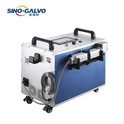


Laser cleaning is widely recognized as one of the greenest industrial technologies for surface preparation. The key advantage lies in its dry working process: no chemical agents or process water required, no wastewater or waste gas discharge. Contaminants are stripped into recyclable solid dust. As a non-contact cleaning solution, it effectively avoids secondary pollution common to conventional surface preparation techniques.
Core Environmental Advantages
Zero chemical contamination
No acids, alkalis or organic solvents are needed. Laser cleaning eliminates risks of wastewater leakage, soil pollution and water contamination that trouble chemical surface treatment.
01
No water consumption
It operates as a fully dry cleaning process. Unlike water-based washing methods, laser surface preparation saves massive volumes of industrial water resources.
02
Controllable waste output
Rust, old paint and oxide layers are separated into tiny solid particles. When paired with a dust extraction system, scattered dust can be captured easily. The solid residue occupies small volume and is convenient for centralized collection and recycling.
03
Low operational consumption & lower carbon footprint
Electronic + technology solutions,complete product architecture systemThe system runs purely on electricity. Unlike sandblasting or dry ice blasting, no continuous consumables such as abrasives or dry ice are needed, cutting down resource waste and lowering the overall lifecycle carbon emission.
04
Non-contact surface treatment
There is no mechanical impact on substrates. It reduces loud operation noise and heavy dust generated by grinding, protecting both workpiece base materials and operators' occupational health.
05
Environmental Comparison with Traditional Surface Preparation Methods
Chemical cleaning
Generates large volumes of toxic wastewater which demands complicated neutralization treatment. Unregulated discharge creates persistent environmental hazards.
Sandblasting & mechanical grinding
Produces high-concentration dust and intensive noise. Spent abrasives create huge waste volumes, often leading to secondary pollution and accidental substrate damage.
Dry ice blasting
Comparatively cleaner, yet dry ice production consumes high energy. Continuous consumable costs remain expensive, and it delivers limited performance on heavy rust layers.
Laser cleaning removes unwanted coatings, rust and oxides via photothermal effect selectively. It addresses major environmental pain points of traditional surface preparation from the source. Fully aligned with green manufacturing and low-carbon development requirements, laser cleaning has earned its reputation as the most eco-friendly industrial surface preparation technology available today.