Rust, the relentless foe of metal surfaces, has long been a thorn in the side of industries and homeowners alike. The battle against rust has taken a revolutionary turn with the advent of laser technology. In this article, we'll explore the fascinating world of laser removing rust, delving into its efficiency, benefits, and applications. From traditional methods to cutting-edge laser solutions, we'll guide you through the landscape of rust removal techniques. By the end of this article, you'll have a comprehensive understanding of why laser rust removal is becoming the go-to choice for many.

The Evolution of Rust Removal Techniques
Rust removal has come a long way since the days of elbow grease and wire brushes. Traditional methods, while still in use, often prove time-consuming, labor-intensive, and sometimes ineffective. Chemical treatments, while more advanced, raise environmental concerns and can be hazardous to handle. Sandblasting, another popular technique, is effective but messy and requires extensive cleanup.


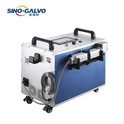
Enter laser removing rust – a game-changing approach that addresses many of the shortcomings of conventional methods. This innovative technique harnesses the power of focused light to ablate rust from metal surfaces with unprecedented precision and efficiency. The laser beam vaporizes rust particles without damaging the underlying metal, offering a level of control and cleanliness that was previously unattainable.
The advantages of laser removing rust are manifold. It's environmentally friendly, producing no chemical waste or abrasive residue. The process is remarkably fast, capable of cleaning large areas in a fraction of the time required by traditional methods. Moreover, laser removal is incredibly precise, allowing for targeted treatment of rusty spots while preserving surrounding areas.

The Science Behind Laser Rust Removal
To truly appreciate the efficacy of laser rust removal, it's essential to understand the science behind it. The process, known as laser ablation, involves using high-energy laser pulses to target and vaporize rust particles. When the laser beam hits the rusty surface, it causes the rust to absorb the energy, rapidly heating and expanding it. This sudden expansion causes the rust to break apart and vaporize, effectively cleaning the metal surface.
What makes laser removing rust particularly effective is its selectivity. Rust, being darker in color, absorbs more laser energy than the underlying metal. This means that the laser can remove rust without significantly affecting the base material, preserving the integrity of the metal surface. The process is so precise that it can even remove rust from intricate or delicate objects without causing damage.
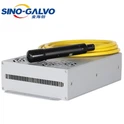
The type of laser used for rust removal typically falls into the category of fiber lasers or solid-state lasers. These lasers can be finely tuned to optimize the rust removal process, adjusting parameters such as pulse duration, energy, and frequency to suit different types of rust and metal surfaces. This level of control ensures that the rust removal process is not only effective but also safe for the material being treated.
Applications and Benefits of Laser Rust Removal
The versatility of laser removing rust has made it a valuable tool across various industries. In the automotive sector, it's used to restore classic cars and prepare surfaces for painting. The shipbuilding industry employs laser cleaning to maintain and repair vessels, while the aerospace sector relies on it for precise cleaning of critical components.
One of the most significant advantages of laser rust removal is its non-contact nature. Unlike abrasive methods, there's no physical contact with the surface, eliminating the risk of scratches or other damage. This makes it ideal for cleaning delicate or valuable items, such as antiques or historical artifacts.
The environmental benefits of laser removing rust cannot be overstated. It requires no chemicals or abrasives, producing minimal waste and reducing the need for disposal of hazardous materials. This aligns well with increasingly stringent environmental regulations and the growing emphasis on sustainable industrial practices.
In terms of efficiency, laser removing rust outperforms traditional methods by a wide margin. It can clean large areas quickly, reducing downtime in industrial settings. The precision of laser cleaning also means less material is removed overall, preserving the dimensions and structural integrity of the treated objects.
Another notable benefit is the improved surface finish achieved through laser cleaning. The process leaves behind a clean, slightly textured surface that's ideal for subsequent treatments like painting or coating. This can lead to better adhesion and longer-lasting finishes, ultimately extending the lifespan of the treated items.
The adaptability of laser removing rust systems is also worth mentioning. Modern laser systems can be integrated into automated production lines or mounted on robotic arms for enhanced flexibility. This allows for the treatment of complex shapes and hard-to-reach areas, making it suitable for a wide range of applications.
As technology continues to advance, we're seeing the development of more compact and portable laser rust removal systems. This opens up new possibilities for on-site cleaning in various industries, from construction to maritime maintenance. The ability to bring the rust removal process to the job site, rather than transporting large items to a dedicated facility, offers significant logistical and cost advantages.


Conclusion
In conclusion, the question "Is rust removed easily?" can now be answered with a resounding "yes," thanks to laser technology. The advent of laser rust removal has revolutionized the way we approach this age-old problem, offering a solution that is efficient, precise, and environmentally friendly. From restoring classic cars to maintaining industrial equipment, laser rust removal has proven its worth across a wide spectrum of applications.
As we look to the future, it's clear that laser technology will continue to play a pivotal role in rust removal and surface preparation. The ongoing development of more efficient and versatile laser systems promises to further expand the capabilities and accessibility of this innovative technique. Whether you're dealing with small-scale restoration projects or large industrial applications, laser rust removal offers a compelling solution to the persistent challenge of rust.
If you're interested in exploring how laser removing rust or other laser applications can benefit your projects or industry, we invite you to reach out to us. At Sino-Galvo, we specialize in cutting-edge laser technology solutions, including galvo scanners and control systems for various industrial and medical applications. Our team of experts is ready to provide you with detailed information and tailored solutions to meet your specific needs. Contact us at Info@sino-galvo.com to learn more about our innovative laser technologies and how they can transform your rust removal processes.
Related Information: How Laser Cleaning Work?