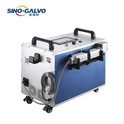


Laser cleaning is an eco-accommodating procedure used to evacuate rust, paint, oxide, and different contaminants from metal surfaces. As a result of its productivity, it is being utilized in an expanding number of utilizations. Laser cleaning requires at any rate a 50-watt beat fiber laser. Conventional mechanical cleaning techniques are frequently observed as monotonous. Rust evacuation can be time and work expending. Oxide expulsion may include unsafe synthetic substances explicit to every material that should be evacuated. Now and again, paint expulsion by sandblasting can harm the metal underneath.

Managing these issues for the most part comes at a noteworthy expense, however, laser cleaning is evolving this: it is a savvy arrangement that decreases cleaning times and support. On the off chance that you are suspicious about these cases with respect to laser innovation, continue perusing for the key realities about what a laser does while expelling contaminants and coatings.
1. All Materials Have an Ablation Threshold
Laser removal happens when a material layer or a covering is expelled with a laser shaft. This is the procedure behind all laser cleaning applications. Take laser rust evacuation on steel. At the point when the pillar hits the surface, sub-atomic securities in the residue or rust layer are broken and launched out from the substrate. In less specialized terms, you can envision that the layer to be expelled is basically disintegrated by the laser pillar.

A straightforward method to get a handle on the significance of the removal edge is to contrast it with tossing a ball over a divider. On the off chance that you don't toss it sufficiently high, it will never make it over to the opposite side. Regardless of whether you toss the ball a thousand times, you will consistently come up short. The equivalent applies to laser derusting. You can shoot the laser shaft thousand times yet as long as the vitality is beneath the removal limit of the material you're working with, nothing will ever be expelled. Presently, every material has various properties and therefore unique atomic bonds. As such, every material has a particular removal limit. To effectively expel a layer from a given material, the vitality moved by the laser shaft must be over the removal edge of that specific material.

2. It is Possible to Remove a Material in a Highly Selective Way
We should proceed with our similarities. Envision there was a second, higher divider behind the first and that a ball was tossed with simply enough vitality to make it over the main divider, however insufficient to make it throughout the second. The ball would skip off the subsequent divider and fall in the middle of the two dividers. By and by, regardless of how often you toss the ball, you will consistently get a similar outcome. You will make it past the main divider yet never the second.
Since there is a removal edge for every material, laser cleaning can segregate between at least two materials when attempting to expel an undesired layer from an item. Given an adequately huge removal edge distinction between the materials, it is conceivable to choose a material to be expelled (i.e., the one with the lower removal limit) while leaving the other material immaculate. For instance, the rust removal limit is a lot slower than the edge for basic metals like steel and aluminum. The equivalent goes for paint and oil. This tremendous hole between two qualities permits contaminants and coatings to be totally disintegrated with no danger of harming the base material underneath. There's sufficiently not vitality for harm to occur.
3. A Strong and Short Power Burst Means Faster Removal
You can consider laser removal as like cutting stone with a sled and an etch. You can utilize a little mallet and do numerous little hits on your etch. Or on the other hand, you could similarly also utilize a greater mallet to use more power, thus decreasing the necessary number of hits and speeding up. The thought is the equivalent with laser cleaning, then again, actually you just need to expel a layer of material: the contaminant.

Fiber laser cleaning frameworks can expel any given layer utilizing two unique strategies. Either the laser shaft is a constant flood of light, or it is best at a given redundancy rate. Regardless of whether the outcome is practically the equivalent, the evacuation speed fluctuates a great deal as indicated by the strategy.
For a given surface region, putting a similar vitality inside a short heartbeat builds the force. It resembles utilizing the greater mallet. A beat laser pillar is more proficient and gives a quicker evacuation speed than a ceaseless shaft. And keeping in mind that short laser beats clean surfaces quicker, they likewise guarantee that the hidden material doesn't warm up something over the top.
5. Laser Cleaning is of Interest for Various Industrial Applications
Expelling the consumed elastic buildup from tire molds; giving another life to old pipelines; cleaning pipes in atomic force plants; and significantly bigger ventures, for example, expelling paint from a corroded extension and getting ready welding surfaces are on the whole activities that can profit by modern laser cleaning.
In Summary, laser cleaning arrangements can defeat a significant number of the issues confronted with rust evacuation and other mechanical cleaning applications. By choosing a particular material to be evacuated, fiber lasers offer a quick, just as a set-and-overlook answer for some enterprises.