

Optical Coherence Tomography (OCT) scans have revolutionized the field of medical imaging and diagnostics, offering unprecedented insights into the human body's intricate structures. This non-invasive imaging technique utilizes light waves to capture high-resolution, cross-sectional images of tissues, enabling healthcare professionals to detect and monitor various conditions with remarkable precision. OCT scans have become indispensable in ophthalmology, cardiology, dermatology, and other medical specialties, providing real-time, micron-level resolution that surpasses many traditional imaging methods.
The Fundamentals of OCT Technology and Its Applications in Medicine
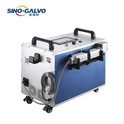
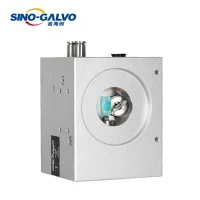
OCT scans represent a quantum leap in medical imaging technology, leveraging the principles of low-coherence interferometry to generate high-resolution, cross-sectional images of biological tissues. At the heart of OCT systems lies the galvo motor, a core component that enables precise and rapid scanning of light beams. Advanced galvo scanners, such as those developed by industry leaders like Sino-Galvo, incorporate cutting-edge photoelectric sensor control modes and optimized mechanical designs to achieve unparalleled speed and accuracy.
The technology behind OCT scans allows for non-invasive "optical biopsy" of living tissues, providing real-time, in situ imaging at resolutions approaching that of histology. This capability has found numerous applications across various medical fields:

Ophthalmology
OCT has become the gold standard for retinal imaging, enabling early detection and monitoring of conditions such as macular degeneration, glaucoma, and diabetic retinopathy.

Cardiology
Intravascular OCT provides detailed images of coronary arteries, assisting in the diagnosis of atherosclerosis and guiding interventional procedures.

Dermatology
OCT scans offer non-invasive assessment of skin lesions, aiding in the early detection of skin cancers and evaluation of treatment efficacy.

Gastroenterology
Endoscopic OCT allows for high-resolution imaging of the gastrointestinal tract, improving the detection and characterization of early-stage cancers and precancerous lesions.
Advancements in OCT Technology: Enhancing Resolution and Speed
The field of OCT has witnessed remarkable advancements in recent years, driven by innovations in both hardware and software components. Key areas of improvement include:
Enhanced Resolution
State-of-the-art OCT systems now offer axial resolutions as fine as 1-2 microns, allowing for visualization of individual cellular layers within tissues. This level of detail is crucial for early detection of pathological changes and precise guidance of therapeutic interventions.
01
Increased Scanning Speed
Modern OCT scanners, powered by high-performance galvo motors like the SG1105 from Sino-Galvo, can achieve scanning speeds of hundreds of thousands of A-scans per second. This dramatic increase in speed not only reduces motion artifacts but also enables functional OCT techniques such as OCT angiography, which can visualize blood flow without the need for contrast agents.
02
Wider Field of View
Advancements in wide-field OCT imaging have expanded the area that can be captured in a single scan, allowing for more comprehensive assessment of larger tissue regions. This is particularly beneficial in ophthalmology, where it enables visualization of the entire retina in a single acquisition.
03
Multi-modal Imaging
Integration of OCT scans with other imaging modalities, such as fluorescence imaging or photoacoustic tomography, provides complementary information that enhances diagnostic accuracy and treatment planning.
04
Artificial Intelligence Integration
Machine learning algorithms are being increasingly applied to OCT image analysis, automating the detection and quantification of pathological features and assisting clinicians in making more accurate and efficient diagnoses.
05
The Future of OCT: Emerging Applications and Potential Impact on Healthcare
As OCT technology continues to evolve, its potential applications in healthcare are expanding rapidly. Some of the most promising areas of development include:
Functional OCT
Beyond structural imaging, functional OCT techniques are emerging that can provide information about tissue metabolism, oxygenation, and mechanical properties. These advancements could lead to earlier detection of diseases and more personalized treatment strategies.
01
Intraoperative Guidance
OCT is increasingly being integrated into surgical microscopes and robotic systems, providing real-time, high-resolution guidance during delicate procedures such as ophthalmic and neurosurgical interventions.
02
Theranostics
The combination of OCT scans imaging with targeted therapies is opening new avenues for personalized medicine, allowing for real-time monitoring of treatment efficacy and adjustment of therapeutic strategies.
03
Point-of-Care Diagnostics
Miniaturization of OCT systems is making it possible to develop portable, hand-held devices for use in primary care settings, emergency departments, and remote locations, potentially revolutionizing access to advanced diagnostic imaging.
04
The continued advancement of OCT technology, driven by innovations in components such as high-performance galvo scanners, is poised to have a transformative impact on healthcare delivery. By enabling earlier and more accurate diagnoses, guiding precise interventions, and facilitating personalized treatment strategies, OCT scans are set to play a crucial role in improving patient outcomes and reducing healthcare costs across a wide spectrum of medical specialties.
Conclusion
The power of OCT scans in modern medical imaging and diagnostics cannot be overstated. From its roots in ophthalmology to its expanding applications across numerous medical fields, OCT has proven to be a game-changing technology that continues to evolve and surprise us with its capabilities. As we look to the future, the potential for OCT to further transform healthcare is immense, promising earlier disease detection, more personalized treatments, and improved patient outcomes.
The ongoing advancements in OCT technology, particularly in the realm of high-performance galvo scanners and integrated systems, are pushing the boundaries of what's possible in medical imaging. Companies at the forefront of this innovation, such as Sino-Galvo, are playing a crucial role in shaping the future of healthcare through their cutting-edge components and systems.
For those interested in learning more about the latest advancements in galvo scanner technology for OCT and other medical imaging applications, please contact Sino-Galvo at Info@sino-galvo.com. Our team of experts is dedicated to providing state-of-the-art solutions that empower healthcare professionals to deliver the best possible care to their patients.