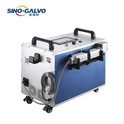


Products Description
Erbium laser (Er:YAG) is a solid-state pulsed laser with a wavelength of 2940nm. Its wavelength is at the peak of water absorption, and its energy can be efficiently absorbed by water-containing tissues, generating precise vaporization effects.
The differences between Er:YAG laser and CO2 fractional laser.
In the field of laser beauty, another widely used laser is the CO2 fractional laser. So, what are the differences between erbium laser and CO2 fractional laser?
The Er:YAG laser works at a relatively shallow level, mainly targeting the epidermis and the superficial dermis. It has a high absorption rate for water, providing precise exfoliation with minimal thermal damage to surrounding tissues. It is suitable for improving shallow acne scars, fine wrinkles, epidermal pigmentation, and mild photoaging. The recovery period is short (about 3 to 5 days for scabbing and shedding), and the risk of postoperative redness and pigmentation is low. However, the effect of a single treatment may not be as obvious as that of carbon dioxide.
CO2 fractional laser (wavelength 10600nm) penetrates deeper and can act on the middle to deep layers of the dermis. It generates tiny thermal damage zones through "focal photothermal effect", stimulating collagen regeneration. It is more suitable for treating deep depressed scars (such as acne scars, surgical scars), obvious wrinkles, enlarged pores and severe photoaging. The postoperative recovery period is longer (7-14 days), and there may be temporary redness, swelling and scabbing, with a slightly higher risk of pigmentation, but the long-term improvement effect is more significant.
When making a choice, it is necessary to consider the type of skin problem, its severity, the tolerance for the recovery period, and personal skin type. Those with sensitive skin or poor pigment metabolism may prefer erbium laser; while for deep scars or severe skin laxity, the comprehensive improvement offered by carbon dioxide fractional laser is more effective. Post-treatment, it is essential to enhance moisturization and sun protection, avoid irritating care, and follow the doctor's advice for follow-up visits and evaluations.
Advantages of Er:YAG Laser in Dental Treatment (Caries Treatment)
Special Wavelength Advantage
The Er:YAG laser has a wavelength of 2940nm, which can be efficiently absorbed by water and hydroxyapatite. This characteristic enables it to precisely target the infected tissues within the periodontal pocket without damaging healthy teeth or soft tissues.
Disinfection and Debridement
The laser energy can instantly vaporize bacterial biofilms, dental calculus and diseased tissues. Meanwhile, the high-temperature effect can kill over 99% of periodontal pathogenic bacteria (such as Porphyromonas gingivalis).
Promoting Healing
The thermal effect of laser can stimulate the proliferation of gingival fibroblasts, accelerate the production of collagen, and help close periodontal pockets and repair bone tissue.
The Origin of Er:YAG Laser Dental Cavity Treatment
Dental caries is a common chronic disease that is contagious. The causes of the disease include various factors such as bacterial metabolism, a diet rich in sugar, poor oral hygiene, and the patient's inherent susceptibility and social and cultural factors (i.e., educational level and employment status), which lead to the destruction of hard and mineralized dental tissues. Specifically, acidic metabolites released by the symbiotic bacteria in the oral biofilm cause demineralization of the tooth surface and the formation of dental caries. The latest "specific theory" and "ecological plaque theory" of the microbiological etiology of dental caries are associated with an increase in the incidence of the disease because specific bacterial species, such as Streptococcus mutans and Streptococcus sobrinus, have been identified as the main pathogens of dental caries, leading to the dysbiosis of the symbiotic microbiota.
In the oral cavity, multi-microbial biofilms formed on the surfaces of teeth and mucus or on implants and dental materials may cause various diseases and complications. The dysbiosis of the oral biofilm can also lead to the growth of acid-producing species related to dental caries, such as Streptococcus, Lactobacillus, and Candida.
Traditional methods for removing dental caries, such as manual and rotary instruments, often cause significant pain for patients. Although local anesthesia can alleviate some of the discomfort, the noise, vibration, and fear of needles still remain. In addition to the risk of removing a large amount of healthy tissue, mechanical techniques may also damage the dental pulp due to thermal stimulation and resulting temperature increase.
Er:YAG laser dental treatment has dual effects (mechanical and thermal), which can destroy microbial biofilms. This is important because if the pathogenic microorganisms in the carious cavity are not well removed, the carious lesion may spread and develop, thereby invading the dental pulp. Residual microorganisms may also be a cause of recurrent caries.
The introduction of laser treatment not only reduces the microbial load but also affects the adhesion of bacteria to the tooth surface. In particular, Er:YAG erbium laser treatment is a common method for the ablation of hard dental tissues because the erbium laser wavelength is consistent with the absorption peaks of water and hydroxyapatite, and can remove mineralized dental substances through micro-explosions. Moreover, carious tissues have a higher water content compared to healthy tissues, so the Er:YAG erbium laser has a higher absorption of chromophores in infected tissues and does not affect the healthy dental tissues beneath the lesion. The Er:YAG erbium laser combines photodisruption, decontamination, and minimally invasive characteristics.
Therefore, compared with traditional therapy (CT), the benefits of using Er:YAG erbium laser for caries treatment include not only high patient comfort but also, most importantly, bactericidal and bacteriostatic properties due to the high temperature generated during irradiation. In fact, the photothermal effect produced during the ablation process can disinfect the residual bacteria in the cavity without causing thermal damage to the dental pulp. The Er:YAG erbium laser can seal the treated dentin surface and reduce the recurrence rate of caries.
Case Analysis of Er:YAG Laser Treatment for Dental Caries
A male patient visited the clinic due to caries in the mandibular premolars and molars. Without local anesthesia, the carious parts of the teeth were removed using an Er:YAG laser handpiece. After adjusting the parameters, cavity preparation and surface etching were completed before acid etching. The entire process took 35 minutes and was very comfortable for the patient. Finally, the teeth were restored with composite resin.
Compared with rotary instruments, laser treatment for dental caries can reduce noise and vibration, thereby reducing pain during the treatment process and increasing comfort. Moreover, without removing healthy tooth tissue, lasers can more precisely cut the decayed part. The safety of Er:YAG laser is relatively high, and it generates the least thermal side effects compared to other lasers. For these reasons, we prefer to use Er:YAG laser, especially for deep treatments.

Conclusion
The Er:YAG laser, with its precise wavelength of 2940nm, acts on the decayed tooth tissue, selectively vaporizing the diseased enamel or dentin while preserving more healthy tooth structure. Its advantages include:
1. Painless operation: The laser energy is gentle and has little stimulation to the dental pulp, so most patients do not need anesthesia.
2. No noise or vibration: It eliminates the fear of noise from traditional drilling, making it especially suitable for children or patients with dental anxiety.
3. Reduced postoperative sensitivity: The wound surface is smoother, reducing the risk of secondary caries.
Although laser treatment for cavities causes less trauma, if the decay is close to the dental pulp, traditional treatment still needs to be combined. After the operation, it is necessary to pay attention to oral hygiene, have regular check-ups, and avoid secondary caries or the detachment of the filling. The core of cavity treatment is timely intervention. No matter which method is chosen, early treatment can effectively prevent further damage to the teeth. It is hoped that you can fully communicate with your doctor based on your own situation and choose a scientific and reasonable plan to protect the health of your teeth.