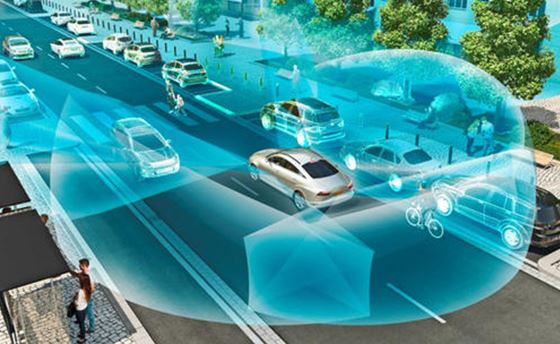


Lidar is a scanning sensor that uses non-contact laser ranging technology. Its working principle is similar to that of a general radar system. It emits a laser beam to detect a target, and collects the reflected beam to form a point cloud and obtain data. These data can be generated as accurate three-dimensional images after photoelectric processing. Using this technology, you can accurately obtain high-precision physical space environment information, and the ranging accuracy can reach centimeter level. Therefore, this technology has become the most popular in the fields of automobile automatic driving, unmanned driving, positioning and navigation, space mapping, security and security.

Lidar classification
From the perspective of technical principles, there are two main types of lidar:
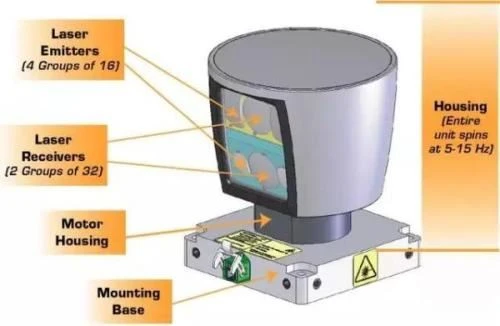
Rotating Lidar: It is arranged by multiple laser beams in a vertical row, and rotates 360° around the axis. Each laser beam scans a plane, and the three-dimensional graphics are displayed after being stacked vertically. Multi-beam laser radar can be divided into 16 lines, 32 lines, and 64 lines. The higher the beam, the more planes that can be scanned, and the more detailed the target information. The low-beam laser radar is easy to bring because of the low point cloud density. The problem is that the resolution is not high.
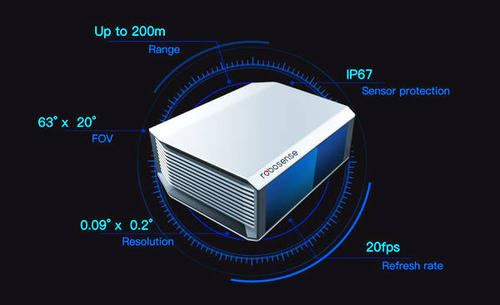
Solid-state laser radar: Abandon the original mechanical scanning method, adopt the phased array principle, there are many fixed small beam group layers, and generate the phase and amplitude of the beam through each array element point, so as to strengthen the beam in the specified direction And suppress the intensity in other directions, so that the direction of the beam can be changed.
Because the solid-state lidar does not have rotating components, this reduces the hardware cost and wear and tear consumption to a certain extent, and under the premise that the individual beam array elements are damaged, the solid-state lidar as a whole can still work continuously and achieve reliability. Huge improvements.
The main application areas of lidar
The core of the downstream application fields of lidar are sweeping robots, AVG cars, auto autonomous driving, unmanned driving, space mapping and unmanned aerial vehicles. Judging from the current distribution of downstream applications in global lidar companies, the majority are still in the fields of smart cars and robots.