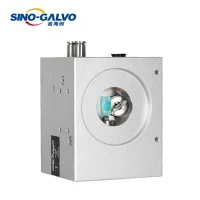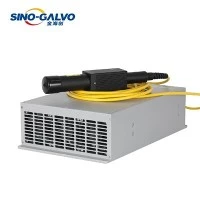


Definition
Active remote sensing equipment that uses a laser as the emission source and uses photoelectric detection techniques. Lidar is an advanced detection method combining laser technology with modern photoelectric detection technology. It is composed of transmitting system, receiving system and information processing. The transmitting system is various forms of lasers; the receiving system uses telescopes and various forms of photodetectors. Lidar uses two working methods: pulse or continuous wave.

Working Principle
The working principle of lidar is very similar to radar. The laser is used as the signal source. The pulsed laser emitted by the laser hits the trees, roads, bridges and buildings on the ground, causing scattering. Some light waves will be reflected to the lidar. According to the principle of laser ranging, the distance from the lidar to the target point is obtained. The pulse laser continuously scans the target object to obtain data of all target points on the target object. After using this data for imaging processing, the Accurate three-dimensional stereoscopic images can be obtained.

Lidar Advantages
(1) High resolution
(2) Good concealment and strong resistance to active interference
(3) Low-altitude detection performance is good
(4) Small size and light weight
Application
The laser scanning method is not only the main way to obtain three-dimensional geographic information in the military, but the data obtained through this way is also widely used in resource exploration, urban planning, agricultural development, water conservancy engineering, land use, environmental monitoring, transportation and communication, earthquake prevention Disaster reduction and national key construction projects have provided extremely important raw materials for national economy, social development and scientific research, and have achieved significant economic benefits, showing good application prospects.

Airborne Marine Lidar
The traditional underwater target detection device is sonar. Can be alert, search, qualitative and tracking of underwater targets. However, it is very large and weighs more than 600 kg, and some even weigh dozens of tons. Lidar is an airborne blue-green laser transmitting and receiving device that emits high-power narrow-pulse laser to detect and classify targets under the sea surface, which is both simple and accurate.
So far, airborne marine lidar has developed three generations of products. The third-generation system developed in the 1990s was based on the second-generation system, adding GPS positioning and height-fixing functions. The system was interfaced with an automatic navigator to realize automatic control of routes and altitudes.
Autopilot Lidar
Lidar has the advantages of high accuracy and high resolution, as well as the prospect of building a surrounding 3D model. However, its disadvantages are that the detection of stationary objects such as isolation belts is weak and the cost of landing the technology is high. Lidar can be widely used in ADAS systems, such as adaptive cruise control (ACC), front vehicle collision warning (FCW) and automatic emergency braking (AEB).