

Laser welding technology has the characteristics of high welding process efficiency and good flexibility. In the automobile manufacturing process, it can be used for the welding of automobile bodies and the welding of various automobile parts, reducing the overall weight of the automobile body, improving the accuracy of body assembly, and meeting the needs of lightweight automobile manufacturing. Quantifying the demand for improved safety performance, it can also reduce assembly costs and stamping costs in automobile manufacturing and improve the integration of the body. Therefore, how to actively and effectively apply laser welding technology has become an issue that current automobile manufacturing companies need to consider. The application of laser welding technology will be discussed in detail below.
The principle of laser welding technology

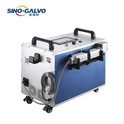
Sino Galvo Laser Welding Machine For Sale
Laser welding, which is essentially a fusion welding technology, is a high-speed, minimally deformed , non-contact welding method. The main principle of laser welding technology is to use laser to generate a single-wavelength light beam. Through an optical oscillator, a high-power laser beam is formed, which acts on the metal surface to quickly vaporize the metal. When the molten metal liquid wraps the vaporization hole, it can react with the stress during the welding process. Under the method of heating and cooling, a weld is formed, and the welding of the metal is finally completed. The density of laser power determines the depth of the weld. When the laser power density is high, the penetration is larger , and the depth and width of the weld are larger. When the laser power density is lower, the penetration is shallower, and the depth and width of the weld are larger. That is smaller.
Advantages and Disadvantages of Laser Welding Technology
Laser welding technology plays an important role in current automobile manufacturing, mainly in the following aspects:
- The thermal influence range of actual welding is small and the amount of deformation is also low;
- The quality and precision of welding are high, and aesthetics can be guaranteed without compromising quality;
- The specific welding operation is flexible and efficient, and can meet the needs of the enterprise;
- The construction noise is low and has good energy-saving effect;
- Suitable for welding materials with brittle texture, high strength and high melting point.
Table 1 Comparison of scores of different welding techniques
| Compare items | Laser welding | Electron beam welding | Tungsten inert gas arc welding | Resistance welding |
| Welding efficiency | 6 | 7 | 4 | 8 |
| Large depth ratio | 9 | 8 | 3 | 4 |
| Weld cross-section morphology | 8 | 8 | 5 | 5 |
| Welding under atmospheric pressure | 9 | 3 | 7 | 9 |
| Welding highly reflective materials | 4 | 8 | 7 | 8 |
| Cost | 4 | 3 | 8 | 8 |
| Operating costs | 6 | 6 | 7 | 9 |
| Reliability | 8 | 4 | 8 | 9 |
| High welding speed | 9 | 9 | 8 | 2 |
| Note: 1~10 is the evaluation score, with 1 being the lowest and 10 being the highest. | ||||
However, laser welding technology also has certain shortcomings, which are as follows: high requirements on the welding position, and the range of welding requirements need to be paid attention to; it is not suitable for materials with large thickness; when the welding material has high thermal conductivity, it will affect the welding effect; The energy conversion efficiency is low, and the solidification time of the weld bead is relatively fast, which restricts the welding effect to a certain extent.
Application of laser welding technology in automobile manufacturing
1. Laser autogenous welding
In laser welding technology, laser autogenous welding refers to two or more welded parts that condense into a whole after the melting and cooling process to complete effective welding. In laser autogenous welding, welding can be completed without adding flux, which can save welding costs. In specific operations, under the action of the laser beam, the surface temperature of the welded part reaches the boiling point in a short time, and the metal vaporizes to generate a hole, as shown in Figure 1. The recoil pressure of the metal vapor and the surface tension of the liquid metal After the gravity reaches a balanced state, the hole will no longer deepen. After the small hole with stable depth is closed, the laser deep penetration welding is completed.
At present, in automobile manufacturing, laser autogenous welding has a wide range of applications, and is often used in tailor welding, assembly welding of car bodies and welding of parts. At present, Magotan, Tiguan and Sagitar products under the Volkswagen brand use self-flux welding method for side panel welding. In some Peugeot and Citroën models, the doors are also welded using laser self-fusion welding. In addition, according to the type of welding seam, there are generally various types such as single straight welding seam, plural and non-linear welding seam. Due to the simple production process of single welding seam, it has been widely used. Volkswagen of Germany first used laser welding for the chassis of Audi models in 1985, and Toyota of Japan used wire-added laser welding for the welding of body side frames in 1986. The large-scale application of laser welding technology in North America was in 1993. At that time, the United States proposed the 2mm project in order to improve the competitiveness of American cars with Japanese cars.
So far, almost all famous automobile manufacturers in the world have adopted laser tailor welding technology extensively. The automobile structural parts involved include body side frames, door inner panels, windshield window frames, wheel arch panels, floor panels, and center pillars. wait. The United States was also the first to introduce high-power lasers into the automobile industry. There are dozens of laser processing stations in the Detroit area, the center of the American automobile industry, which are used for cutting automobile metal parts and welding gears, shortening the modification of automobiles from 5 years to 2 years. Year. The General Motors Company of the United States has adopted more than 20 laser processing production lines. The Ford Motor Company of the United States uses Nd: YAG laser combined with industrial robots to weld car bodies, which greatly reduces manufacturing costs. In 2000, 50% of the three major American automobile companies had Resistance spot welding production lines were replaced by laser welding production lines. In Japan, the successful application of laser welding in production lines has attracted worldwide attention. For example, the new method of laser welding and then stamping thin steel plates in automobile body manufacturing has now been imitated by most automobile manufacturers in the world. Many famous automobile companies in the world have built special production lines for laser welding: Thyssen Steel Company's car floor tailoring production line, Volkswagen Factory's gear laser processing production line, and 8 of the 18 factories of the Mercedes-Benz Automobile Factory are equipped with lasers. Processing Equipment.

Figure 1 Principle diagram of laser self-fusion welding
2. Laser filler wire welding
In laser welding technology, the principle of laser filler welding is to add specific welding materials to the weld, and melt and fill the welding materials through the laser beam to form a welded joint. Compared with traditional non-filler wire welding methods, laser wire filler welding has obvious advantages. It can not only expand the scope of laser welding, but also complete the welding of thick plates at lower power, and has better welding performance. Effect. It should be noted that in the application of laser filler wire welding , not only the welding wire must be melted, but also the base metal must be melted, so as to produce small holes in the base metal so that the welding wire and base metal can fully fuse and generate new ones. Mixed molten pool. There are obvious differences between the mixed molten pool, the welding wire, and the base metal. It can improve some performance shortcomings of the base metal itself. After using the welding wire with reasonable composition as the filling material, the welding seam can be ensured to have high wear resistance and corrosion resistance.
3. Laser arc hybrid welding
In laser welding, the principle of laser arc hybrid welding is to combine the laser heat source and the arc to work together on a molten pool to achieve welding. The welding principle is shown in Figure 2. This welding method has the characteristics of small deformation, fast speed and high adaptability.

Figure 2 Principle diagram of laser arc hybrid welding
In the production of German Audi company's series of cars, the laser arc hybrid welding process is applied to the most critical all-aluminum body welding. The car body is the body of the second-generation luxury Audi A8 series, which is designed to pursue impact safety and resistance to torsional deformation. The welds of laser arc hybrid welding meet all requirements and show the characteristics of strong toughness, high strength and large penetration depth . In order to meet the high expectations of customers for this car, every detail must be refined to ensure the manufacturing quality of the car. The narrow weld seams of laser hybrid welding can meet the requirements of high appearance requirements, so the top corners of the body frame no longer need to be filled with plastic strips. In the field of light vehicle manufacturing, all the above-mentioned requirements as well as some special conditions must be met, and the manufacturing process of all-aluminum bodywork has even more stringent requirements.
4. Laser remote welding
In laser welding technology, laser remote welding can perform long-distance processing with the help of a high-speed scanning galvanometer, and weld parts with different power laser beams. Because of its unique technical advantages, it is currently widely used in the panoramic sunroofs of Mercedes-Benz and the side panels of Volkswagen and Audi.
When currently applying laser remote welding in automobile manufacturing, it has the following advantages: (1) It has strong positioning accuracy and can achieve rapid welding to meet the manufacturing needs of automobile companies; (2) It can be combined with different structural strengths. Welding to meet the needs of different weld shapes.
Laser remote welding has high demand for materials and equipment. When the component thickness is large, the weld depth cannot be reduced and the shear strength at the weld is low.

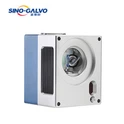
2000w High Power Galvo Scanner For Laser Welding
5. laser brazing
Among laser welding technologies, laser brazing technology has the advantages of beautiful appearance, strong sealing, and high weld strength. The specific principle is to focus the laser beam on the surface of the welding wire, melt the welding wire and fill it in the welding part, and complete the welding with the brazing layer. Although this method is similar to fusion welding, the base material is not melted in actual operation. Therefore, the melting point of the solder is required to be lower than that of the base metal, and effective welding can be achieved through liquid solder. The principle is shown in Figure 3. Laser brazing is currently used for trunk lid welding for Volkswagen, Haima, Chery and Audi. Laser brazing is also often used for the connection of top covers and side panels in brands such as Cadillac, Porsche, Ford and Volkswagen. When using this technology, it is important to note that the welding process is affected by many factors, especially process parameters. For example, in terms of welding speed, laser power and spot diameter, the above process parameters need to be adjusted and designed based on actual welding to ensure the effectiveness of laser brazing.

Figure 3 Laser brazing principle
Laser brazing equipment usually requires the brazing processing lens to be integrated into the robot arm. The laser beam is focused on the joints of the sheets, melting wire ( such as copper-silicon wire ) to join the components. The success of this processing method is that the connection strength it achieves is close to the welding strength, and its welds are beautiful. The welds produced by laser brazing are known for their high sealing properties, smoothness and cleanliness. Therefore, the brazed product requires little rework. For example, the car body can be painted directly after cleaning.

Figure 4 Laser brazing
The usefulness of diode lasers in the field of laser brazing is highly valued around the world. More than 800 diode lasers are in successful long-term use in automotive body assembly applications around the world. High-quality laser brazing not only has high welding strength and low thermal impact, but also has high requirements for the aesthetics of the weld connection. A major processing advantage of semiconductor lasers is that the molten pools they produce are stable. In addition, the three-spot module shows greater advantages in brazing applications: even when welding hot-dip galvanized steel plates that are difficult to braze, this technology can still ensure high quality without reducing the welding speed. Welded seam connection.

Figure 5 Brazing hot-dip galvanized sheets with three spots
In the production of automobile bodies, laser brazing has long become a mainstream processing method. However, more and more car bodies are using galvanized steel sheets, which has caused some problems: an increase in particle spatter during the brazing process; ripples are produced at the welding wire connections, so the processing speed must be reduced to avoid these problems. A breakthrough solution has been developed: using a multi-spot module, that is, the side spot is in front of the main spot, and the galvanized layer around the weld can be removed first, so that the brazing speed can be guaranteed without reducing the brazing speed. The brazing process is smooth. This process is well received in the industry.

Figure 6 Brazing of electro-galvanized steel sheets
Traditional electroplated zinc diode laser brazing uses single spot technology. The laser source is integrated into the brazing robot. Laser cladding of silver or brass based materials is possible due to the stable molten pool produced by the diode laser . The welds are beautiful and of high quality. Volkswagen Touran once conducted an experimental comparison of brazing between a 4 kW YAG laser and a 6 kW diode laser in Wolfsburg, Germany . The operational stability of LDF diode lasers has been proven in series production.
Conclusion
For the automobile manufacturing industry, different laser welding technologies have different utilization values. Choosing reasonable welding methods for different parts of the car will help improve the overall quality of automobile manufacturing, and also meet the needs of automobile companies in terms of welding cost and welding efficiency. To this end, this article analyzes the principles, advantages and disadvantages of laser welding technology, and explores the application effects of laser autogenous welding, laser filler wire welding , laser arc hybrid welding, laser remote welding and laser brazing in automobile manufacturing. Provide welding experience for automobile manufacturing, improve the welding level of automobile companies, and promote the healthy and sustainable development of the automobile manufacturing industry.
Sino-Galvo Tech is a professional manufacturer of laser galvanometers. Our product lines include high-power welding galvanometers, handheld welding machines, and laser galvanometer welding machines. We can also customize products for you according to your needs. IF YOU HAVE ANY NEEDS OR QUESTIONS, PLEASE SEND INQUIRY BELOW THE ARTICLE .