

This article introduces the use of anilox rollers and the necessity of periodic cleaning, points out the disadvantages of several traditional cleaning methods, and explains the principles and advantages of laser cleaning anilox rollers.

Picture 1: Comparison before and after laser cleaning anilox roller
The uses of anilox rollers and several traditional cleaning processes
The anilox roller is the core component of the flexographic printing machine. It is responsible for evenly transferring a certain amount of ink to the printing plate. In flexographic printing, the cells of the anilox roller are inevitably blocked by ink skin, paper coating, paper wool or other dirt, causing the cell volume of the anilox roller to decrease and the ink to be contaminated, affecting the printing quality. To use the anilox roller properly, it must be cleaned frequently. Due to the fine surface structure of the anilox roller and the thin cell walls, great care must be taken during cleaning to achieve a certain cleaning effect without damaging the anilox roller.

Picture 2:Anilox roller cell arrangement
The traditional cleaning processes for anilox rollers include the following:
1. Manual cleaning method
Apply the cleaning agent to the surface of the anilox roller, use a copper wire brush to clean the chromium-plated metal anilox roller; use a steel wire brush to clean the ceramic anilox roller. This method is easy to clean and does not cause pollution, but if the cleaning is not thorough, it will affect the ink transfer effect. Generally suitable for anilox rollers with low screen lines or anilox rollers that are not very dirty.
2. Chemical cleaning method
The corrosive cleaning agent (usually an alkali solution) evenly on the surface of the anilox roller. If necessary, wrap a layer of plastic on the surface of the anilox roller to prevent the liquid from evaporating. Ablate the anilox roller for 1 to 48 hours. Use water or Use alcohol solution (do not use acidic solutions such as acetic acid) combined with manual cleaning methods to clean the anilox roller after the ink has been fully softened ( see the picture 3 ). This type of cleaning method has a better cleaning effect, but it has a certain corrosive effect on the anilox roller and can cause environmental pollution.

Picture 3 :chemical cleaning method
3. Jet cleaning method
Fine plastic particles, CO2 dry ice particles or baking soda softening cleaning medium onto the surface of the anilox roller to crush the solidified ink to achieve the purpose of cleaning ( see the picture 4 ). This cleaning method has high requirements on the spray medium and spray cleaning method, and requires experienced personnel to operate, otherwise the anilox roller will be easily damaged.

Picture 4:Jet cleaning method
4. Ultrasonic cleaning method
The anilox roller is immersed in the chemical cleaning solution in the ultrasonic cleaning tank. The bubbles generated by the ultrasonic vibration in the liquid pool cause continuous inward explosive force, which expels the ink from the cells of the slowly rotating anilox roller and flows away with the cleaning liquid (see picture 5). The long-term vibration of this cleaning method will produce tiny cracks on the surface of the ceramic anilox roller. High pH or coarse chemicals will penetrate into the porous ceramic coating, gradually corroding the base material and affecting the life of the anilox roller.

Picture 5:Ultrasonic cleaning method
Anilox roller laser cleaning process
1. Laser cleaning technology principle
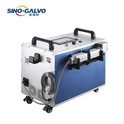
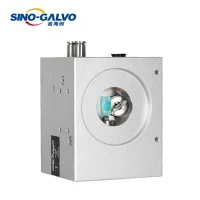
Laser cleaning technology is an advanced precision cleaning technology that has been developed in recent years and has been gradually applied. It uses a high-energy laser beam to irradiate the surface of the workpiece, causing the dirt, rust spots, coatings or residues on the surface to absorb the laser energy and evaporate instantly or generate expansion stress and peel off under the impact of the light wave, thereby effectively removing the attachments on the surface of the cleaning object at high speed, to achieve the purpose of cleaning (see picture 6).

Picture 6:Principle of laser cleaning anilox roller
2. Advantages of Laser Cleaning Anilox Rolls
Laser cleaning anilox rollers has the following advantages, which can overcome some of the shortcomings of traditional cleaning processes.
a. Does not require any chemical cleaning agents, no pollutant emissions, green and environmentally friendly.
b. Use nanosecond short pulse laser for non-physical contact cleaning. Cleaning without heat accumulation, no mechanical stress deformation, and no damage to the anilox roller.
c. No consumables are required for cleaning, and the cleaning cost is low.
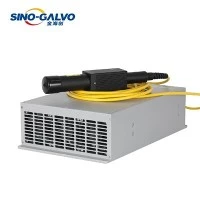
d. Using flexible optical fiber to conduct laser energy, combined with automatic control technology, flexible and precise cleaning of anilox rollers can be achieved.
e. The smoke and solid waste after cleaning can be easily collected and processed.
Due to the structural characteristics of the anilox roller, the mechanical structure and movement mode of the anilox roller laser cleaning equipment are relatively simple. What needs to be grasped is the laser power density and energy density obtained per unit time on the anilox roller surface during laser cleaning. Laser cleaning of anilox rollers mostly uses pulse lasers, which use nanosecond (10-9s) laser pulses with peak power laser energy of tens of kilowatts or more to impact the dry stains in the cells of the anilox roller, causing them to break and peel off.
It is necessary to accurately control the size of the laser energy and the movement speed of the laser focused spot on the surface of the anilox roller, so that it can quickly remove stains without damaging the cells and walls of the anilox roller.
We, Sino-Galvo Tech, has more than 23 years experience in laser industry, including laser cleaning, laser marking, laser welding and laser beauty etc. If you have specific needs or any quetions, please contact us via "Send inquiry" below, thank you!