

Cardiovascular disease is one of the leading causes of death worldwide: the average annual increase rate of cardiovascular disease in China is 9.85%, which is still on the rise. Prosthetic heart valves can be divided into: mechanical valves, biological valves. Mechanical flaps are designed to last longer (more than 50 years), but are more prone to associated complications and require lifelong anticoagulation and testing of clotting; Biotic valves have a shorter lifespan (10-20 years) than mechanical valves and have the advantage of not having to take anticoagulants for a long time.

In recent years, with the development of biotechnology, the disadvantage of low durability of biological valves has been gradually overcome, and research data have proved that the 20-year survival rate of bovine pericardial biological valves has reached more than 90%, far higher than that of mechanical valves of about 45%.
Among the biological valve materials, bovine pericardial tissue has become the mainstream product in the European and American markets because of its best mechanical properties and longer durability than the porcine aortic valve.
From bovine pericardial tissue to laser cleaning
The pericardial tissue is about 0.3-0.4 mm thick, and about 50um of crude fibers are present on the coarser side. Because the substrate is thin, pollutants grow on the surface of the substrate, it is difficult to remove by other cleaning methods such as chemical or ultrasonic, the current manual production time of each valve takes about 12-18 hours, most of them use manual methods to remove the surface fibers little by little with tweezers and then suture, the efficiency is very low and the fiber removal effect is not good.

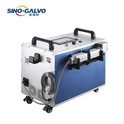
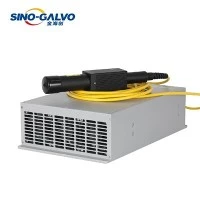
Pulsed laser cleaning equipment can be applied to the removal of fibers on the surface of pericardial tissue. Laser cleaning is to use laser energy to penetrate the surface of the object to make electrons absorb energy, transfer to the crystal lattice to produce vibration, and generate macroscopic temperature in 10 picoseconds to vaporize pollutants, so as to achieve the purpose of cleaning.

From laser cleaning to medical devices
Laser cleaning has the advantages of non-contact and pollution-free, micron-level processing scale, no change in the chemical or physical properties of the biological material itself, and no damage to the substrate. In addition to artificial biological heart valves and various patches, other mechanical or biological tissues such as catheters, coronary stents, balloons, occluders for the treatment of congenital heart disease, dental implants and ceramic materials can be applied to laser cleaning.
At present, ultrasonic cleaning, plasma cleaning and other industrial cleaning methods have been widely popularized in the application of medical devices, becoming the "standard" of laboratory or clinical equipment, laser cleaning because the industrialization time is too short, most people are still a little unfamiliar with it, and have not yet made achievements in the field of medical devices.
However, as the scientific research results of the corresponding disciplines are gradually put into the market, it is believed that laser cleaning will play a more important role in the production of more medical devices in the future and shine.