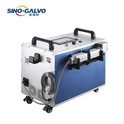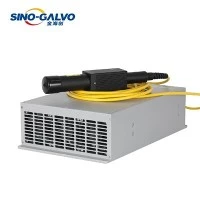


Absolutely. Fiber laser is the dominant and top-choice solution for fiber laser for metal engraving, delivering efficient and precision processing for most metals including stainless steel, aluminum, copper and carbon steel.
Core Advantages of Fiber Laser for Metal Engraving


1064nm wavelength inherently optimized for metal processing
The 1064nm near-infrared spectrum is highly absorbable by all types of metals with stable and controllable thermal effects. It can generate high-contrast oxidized markings and perform high-precision controlled deep ablation, covering diverse processing demands such as metal marking, shallow engraving and deep engraving.
Superior beam quality for ultra-fine metal engraving
Boasting beam quality M²<1.2, it produces an extremely tiny focused spot with positioning accuracy up to ±0.01mm. It enables intricate characters, high-definition logos and micro QR codes on metal workpieces, effortlessly fulfilling high-standard precision metal marking tasks.
High-speed processing & lower long-term operational costs
It features high electro-optical conversion efficiency and minimal overall maintenance requirements. The maximum marking speed exceeds 10000mm/s, supporting large-format deep metal engraving and mass continuous production of hardware parts to effectively boost production capacity and cut manufacturing costs.
Broad compatibility with all metal substrates
It works seamlessly with stainless steel, carbon steel, aluminum alloy, copper, titanium alloy and various metal-coated workpieces. For highly reflective precious metals like gold and silver, stable processing can be achieved simply by adjusting power and pulse parameters.
The depth of engraving varies for different materials under the same parameters.


Process Selection [ Parameter Reference for Metal Engraving Scenarios]
Surface Marking
metal serial numbers, nameplate markings
20W–30W fiber lasers are sufficient to create crisp, long-lasting markings on stainless steel and anodized aluminum surfaces.
Deep Metal Engraving
molds, hardware tools, component deep carving
Models with power above 50W are recommended (60W–100W Q-switched / MOPA fiber lasers). The controllable engraving depth ranges from 0.1mm to 2mm, delivering highly three-dimensional, wear-resistant textures.
Note
Processing Tips for Highly Reflective Metals (pure copper, high-purity aluminum, gold, etc.)
High-reflection materials tend to generate back-reflected light. High-power lasers or dedicated pulse control processes are recommended to protect optical components.
Comparison of Main Laser Sources for Metal Engraving

Fiber Laser vs CO₂ Laser
CO₂ lasers emit a 10.6μm wavelength and excel at non-metal processing such as wood and acrylic. Most metals feature extremely high reflectivity to this spectrum and cannot be engraved directly. Fiber lasers are dedicated light sources for fiber laser for metal engraving.
Fiber Laser vs UV Laser
355nm UV lasers adopt cold processing, ideal for heat-sensitive coating stripping and ultra-micro machining. However, they require high capital investment and offer limited engraving depth. The thermal processing solution of fiber lasers is far better suited for deep metal engraving and mass production of industrial components, striking a perfect balance between performance and cost.

Selection Summary
For all fiber laser for metal engraving applications including metal nameplates, component serial numbers, embossed logos, industrial traceability QR codes and deep engraving on hardware molds, fiber laser solutions feature mature technology and stable processing performance, standing out as the optimal option with the best overall cost-performance ratio.
FAQ
Q: WHAT TYPES OF METALS CAN A FIBER LASER ENGRAVE?
A: A professional fiber laser for metal engraving works exceptionally well on nearly all industrial metals, including stainless steel, carbon steel, aluminum, copper, brass, titanium, and highly reflective precious metals like gold and silver. It delivers stable, high-contrast engraving and marking results on both common and high-reflective metal surfaces.
Q: IS FIBER LASER ENGRAVING PERMANENT ON METAL?
A: Yes. Marks created by fiber laser for metal engraving are permanent, wear-resistant, and corrosion-proof. Unlike ink printing or sticker labels, laser etching removes or oxidizes the metal surface physically and chemically, ensuring the markings withstand friction, high temperature and long-term outdoor use.
Q: CAN FIBER LASERS DO DEEP ENGRAVING ON METAL?
A: Absolutely. High-power fiber laser for metal engraving (50W–100W) supports controllable deep metal engraving from 0.1mm to 3mm. It is widely used for mold engraving, hardware tool embossing, and thick metal part carving with strong stereoscopic texture and excellent durability.
Q: DO FIBER LASERS WORK BETTER THAN CO2 LASERS FOR METAL ENGRAVING?
A: Yes. CO2 lasers are mainly designed for non-metal materials and cannot mark bare metals effectively due to high reflectivity. The 1064nm wavelength of fiber laser for metal engraving matches metal absorption perfectly, making it the most ideal solution for professional metal marking and engraving.
Q: IS SPECIAL MAINTENANCE REQUIRED FOR FIBER LASER ENGRAVERS?
A: Fiber laser for metal engraving features ultra-low maintenance needs. It requires no consumables, no lamp replacement, and has a service life of over 100,000 hours. Regular simple cleaning of the lens and working table is enough to maintain long-term stable operation.
Q: CAN FIBER LASERS MARK HIGH-REFLECTIVE METALS LIKE COPPER AND ALUMINUM?
A: Yes. Optimized pulse parameters and high-power configuration enable our fiber laser for metal engraving to effectively process high-reflective metals such as pure copper, high-purity aluminum and gold, solving the common back-reflection problems of traditional laser equipment.