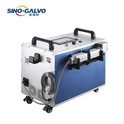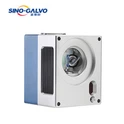


There are four types of lasers currently used for microvias in printed circuit boards: CO2 lasers, YAG lasers, excimer lasers, and copper vapor lasers. CO2 lasers are typically used to produce holes of approximately 75 μm, but since the beam is reflected back from the copper surface, it is only suitable for removing the dielectric.

The most common laser used in the printed circuit board industry is the QNd: YAG laser with a wavelength of 355 nm in the UV range. This wavelength allows most metals (Gu, Ni, Au, Ag) to melt when the printed circuit board is drilled, and its absorption rate exceeds 50% (Meier and Schmidt, 2002), and organic materials can be melted. The photon energy of the ultraviolet laser can be as high as 3.5 - 7.5 eV, which can break the chemical bond during the melting process, partly through the photochemical action of the ultraviolet laser, and partly through the photothermal action. These properties make UV lasers the first choice for printed circuit board industrial applications.

The YAG laser system has a laser source that provides an energy density (flow) of more than 4 J/cm 2 , which is required to drill through the microvia surface. The melting process of organic materials requires an energy density of only about 100 mJ/cm 2 , such as epoxy resin and poly cool limbs. In order to operate correctly in such a wide spectral range, very precise and precise control of the laser energy is required. The micro-via hole drilling process requires two steps. The first step is to open the copper foil with a high energy density laser, and the second step is to remove the dielectric with a low energy density laser.
This system is very suitable for prototype production because it can be drilled and configured from flexible to rigid printed circuit boards, including metal polymers such as solder resists, protective layers, dielectrics, and more.