

With the rapid development of railway train technology, the speed of trains has increased in recent years, so the performance requirements of various parts of the train have been increased accordingly. The vehicle wheelset is an important part of the train operation. It is to ensure that the train runs and turns on the rails and bears all the static and dynamic loads from the train. It is one of the most critical control points for determining the safety of the train. Therefore, during the maintenance of the train, the maintenance requirements for the wheelset are also extremely strict.

At present, in the process of maintenance, the steel wire brush is used to remove rust and clean water to clean the axle and wheel surfaces. However, this method has many disadvantages. First, the wire brush head wears more,after a certain degree of wear, a new brush head must be replaced, and the equipment cost is higher. Second, the friction between the brush head and the surface of the workpiece during brushing will cause a large number of steel wires to fall off, and a large amount of fine falling thread floating into other components will cause equipment failure, which will endanger the personal safety of the operator in serious cases. The third is the heavy pollution on site. The friction between the steel brush and the workpiece produces a lot of noise pollution. At the same time, a large amount of steel wire cutting and sewage after washing cause waste pollution and a harsh working environment. The fourth is limited by the physical structure. This brushing method has cleaning dead corners, and the workpiece can not be cleaned locally. It needs to be manually polished. Therefore, there is an urgent need for a new surface treatment technology that can meet the requirements of the surface cleanliness of the vehicle wheel shaft maintenance process and eliminate the above-mentioned drawbacks to solve such problems.

Laser cleaning is such a new technology. It has the characteristics of green, no pollution, no direct contact, no damage to the substrate, and low operation and maintenance costs. It can effectively get rid of oil stains, rust, paint, oxide scale and other attachments on the metal surface. Initially used in many industries such as molds, auto parts, and railways.
Principle of laser composite cleaning
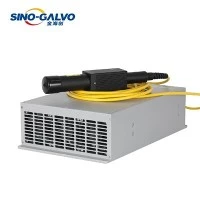
Based on the original single pulse laser cleaning technology, laser compound cleaning integrates pulse laser and continuous laser, a new surface treatment method formed by the interaction of continuous and pulse energy. In the process of treating attachments on the surface of the workpiece, the continuous laser large spot irradiates the attachment surface, and the continuous laser energy with evenly distributed energy absorbed by the attachment is converted into heat energy, which causes thermal expansion between the metal material and the attachment, and generates force and reduces The binding force between the two (main softening effect). Subsequently, the pulsed laser outputs pulsed laser energy, and the resulting vibration shock wave disengages the attachment that has reduced the binding force from the metal surface (mainly peeling off) to achieve rapid laser cleaning. Compared with the traditional single-pulse laser cleaning technology, the laser cleaning efficiency can be significantly improved without using a high-power pulsed laser.

Practical application case
Cleaning object: train wheels

Index requirements:
1. Surface quality ≥ Sa2.5
2. Does not affect the surface roughness
3. Cleaning time of single shaft≤15min
Comparison of test results between single pulse laser cleaning and laser composite cleaning:
| Cleaning Method | 500W pulse cleaning | 200W pulse + 1000W composite cleaning |
| Number of Cleans | 3 | 1 |
| Cleaning Quality | ≥Sa2.5 | ≥Sa2.5 |
| Surface Roughness | Make a difference | have no influence |
| Cleaning Efficiency | About 70 min/root | About 14 min/root |

According to the cleaning effect and data analysis, we draw the following conclusions:
The compound cleaning of 200W pulse + 1000W continuous laser can meet the index requirements in efficiency and effect. The 500W pulse laser cleaning can meet the effect requirements, but it cannot meet the efficiency requirements, and the 200W pulse + 1000W composite cleaning efficiency is 500W pulse cleaning efficiency 5 Times.
As a branch of laser cleaning technology, laser compound cleaning not only retains a series of advantages of single-pulse cleaning, but also greatly improves cleaning efficiency. The operation and maintenance, shipbuilding, nuclear industry and other industries have broad application prospects.
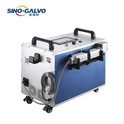
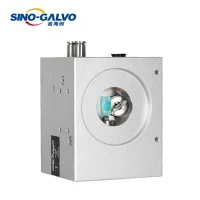
Sino-Galvo Tech. specializes in optical galvanometer scanner and its control system’s R&D, production and sales. Our self-developed laser cleaning system has no damage to the substrate, can meet long-time operation of high power laser cleaning, and can be matched with various types of lasers.
Welcome to consult: +8618921551023