

As the country's requirements for environmental protection become more stringent, laser cleaning technology has attracted more and more attention. This article briefly introduces the principle of laser cleaning technology and its advantages and disadvantages.
The principle of laser cleaning
Laser cleaning is to use the high energy and high concentration of the laser to irradiate the workpiece to be processed, so that the attachments on the surface of the substrate (dirt, scale, rust, organic coating, etc.) absorb the laser energy, and then melt, vaporize, Instantly expand by heat and be driven away from the surface of the substrate by steam, so as to achieve the purpose of purifying the surface of the substrate.

Laser cleaning advantages
Laser cleaning is effective, fast, and low cost; the thermal and mechanical load on the substrate is small, and the substrate is not damaged. No water or solvent is needed, and the waste is easy to collect and has no pollution to the environment. Safe and reliable without harming the health of the operator. It has a wide range of applications and can remove rust spots, scale, dirt, and coatings of various thicknesses and components. The cleaning process is easy to automate and realize remote remote operation, which can be used for large-scale laser cleaning.
Disadvantages of laser cleaning
At present, laser cleaning is relatively more expensive than traditional methods such as pickling, sandblasting, dry ice cleaning, and ultrasound.
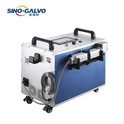
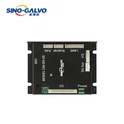
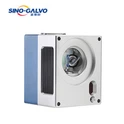
Sino-Galvo Tech. specializes in optical galvanometer scanner and its control system’s R&D, production and sales. Our self-developed laser cleaning system has no damage to the substrate, can meet long-time operation of high power laser cleaning, and can be matched with various types of lasers.