Laser weld technology has revolutionized the metal fabrication industry, offering a powerful method for joining steel components. This advanced technique utilizes a concentrated beam of light to melt and fuse steel surfaces together, resulting in strong, high-quality welds. Laser welding is particularly effective for steel due to its ability to produce deep, narrow welds with minimal heat-affected zones. This process is suitable for various types of steel, including carbon steel, stainless steel, and galvanized steel sheets, making it a versatile solution for numerous industrial applications.
The Science Behind Laser Welding Steel
How Laser Welding Works?
Laser welding is a sophisticated process that harnesses the power of focused light energy to join metal surfaces. When applied to steel, the laser beam generates intense heat at a precise point, causing the material to melt and fuse. This localized heating allows for exceptional control over the welding process, resulting in clean, strong welds with minimal distortion.
The laser welding process typically involves the following steps:
1. Beam generation: A high-powered laser source produces a concentrated beam of light.
2. Beam delivery: The laser beam is directed to the workpiece through a series of mirrors or fiber optics.
3. Focusing: The beam is focused onto a small spot on the steel surface using specialized optics.
4. Melting and fusion: The intense heat melts the steel at the focal point, creating a weld pool.
5. Solidification: As the laser moves along the weld line, the molten metal cools and solidifies, forming a strong bond.
Advantages of Laser Welding Steel
Laser welding offers numerous benefits when working with steel:
1. Precision: The focused laser beam allows for extremely accurate welds, even on complex geometries.
2. Speed: Laser welding can be performed at high speeds, increasing productivity.
3. Minimal heat-affected zone: The localized heating results in less thermal distortion and better material properties.
4. Deep penetration: Laser welding can achieve deep, narrow welds, ideal for thick steel sections.
5. Versatility: It can weld a wide range of steel thicknesses and types.
6. Automation: The process is easily automated, ensuring consistent weld quality.
Types of Steel Suitable for Laser Welding

Carbon Steel
Carbon steel, a widely used material in various industries, is highly compatible with laser welding. The process works well with different grades of carbon steel, from low-carbon to high-carbon varieties. Laser welding of carbon steel produces strong, durable joints with minimal distortion, making it ideal for applications in automotive manufacturing, construction, and general fabrication.

Stainless Steel
Stainless steel, known for its corrosion resistance and aesthetic appeal, is another excellent candidate for laser weld. The process is particularly beneficial for stainless steel as it minimizes heat input, reducing the risk of sensitization and maintaining the material's corrosion-resistant properties. Laser-welded stainless steel joints find applications in food processing equipment, medical devices, and architectural elements.

Galvanized Steel
Galvanized steel sheets, which are coated with a layer of zinc for corrosion protection, can also be effectively laser welded. The high-energy density of the laser beam allows for rapid heating and cooling, minimizing damage to the zinc coating. This makes laser welding an attractive option for joining galvanized steel in automotive body panels and HVAC components.
Advanced Laser Welding Technologies for Steel
Hand-Held Laser Welding Systems
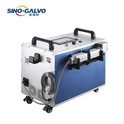
Recent advancements in laser welding technology have led to the development of hand-held laser welding machines, such as the JHC-LW series. These innovative systems offer unparalleled flexibility and convenience compared to traditional fixed-path welding setups. Hand-held laser welders are particularly useful for welding large workpieces or components with complex geometries.
Key features of hand-held laser welding systems include:
Flexible operation: Operators can easily maneuver the welding head to reach difficult areas.
Overcoming workspace limitations: No need for large work tables or fixed positioning systems.
Versatility: Suitable for various welding positions, including inside and outside right angles and plane welds.
High power options: Available in 1500W, 2000W, and 3000W configurations to suit different steel thicknesses and applications.
Water-Cooled Laser Welding Systems
Water-cooled laser weld systems represent another significant advancement in steel welding technology. These systems utilize a sophisticated cooling mechanism to manage heat generation during the welding process, allowing for extended operation and improved weld quality.
Benefits of water-cooled laser welding systems for steel include:
Enhanced thermal management: Efficient heat dissipation allows for longer welding cycles and higher power outputs.
Improved weld consistency: Stable operating temperatures contribute to more uniform weld quality.
Increased productivity: Reduced downtime for cooling and maintenance leads to higher overall efficiency.
Extended equipment lifespan: Proper thermal management helps protect sensitive optical components and laser sources.
Remote Laser Welding
Remote laser welding is a cutting-edge technique that allows for non-contact welding of steel components. This method utilizes sophisticated beam delivery systems and galvanometer scanners to rapidly position the laser beam across the workpiece surface.
Advantages of remote laser weld for steel fabrication:
High-speed welding: The fast beam positioning allows for extremely rapid welding cycles.
Accessibility: Ability to weld hard-to-reach areas without direct contact with the workpiece.
Reduced fixturing: Minimal clamping requirements due to the non-contact nature of the process.
Flexibility: Easy adaptation to different part geometries and welding patterns.
Improved part quality: Reduced heat input and distortion compared to traditional welding methods.
As laser welding technology continues to evolve, it offers increasingly sophisticated solutions for steel fabrication across various industries. From hand-held systems that provide unmatched flexibility to remote welding techniques that push the boundaries of speed and precision, laser welding is transforming the way we work with steel.
Conclusion
Laser welding has proven to be an exceptionally effective method for welding steel, offering a combination of precision, speed, and versatility that is unmatched by traditional welding techniques. As we've explored, this advanced technology is capable of welding various types of steel, from carbon steel to stainless steel and galvanized sheets, with remarkable results. The advent of hand-held laser welding systems, water-cooled setups, and remote laser welding techniques has further expanded the capabilities and applications of laser welding in steel fabrication.
For industries seeking to enhance their steel welding processes, laser welding presents a compelling solution that can significantly improve productivity, quality, and overall manufacturing efficiency. As technology continues to advance, we can expect even more innovative applications of laser welding in steel fabrication, further cementing its position as a cornerstone of modern manufacturing.
If you're interested in exploring how laser weld technology can benefit your steel fabrication processes, or if you have questions about galvanometer scanning systems and other laser-related equipment, don't hesitate to reach out to the experts at Sino-Galvo. Contact us at Info@sino-galvo.com for more information on our cutting-edge laser solutions and how they can elevate your manufacturing capabilities.