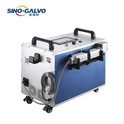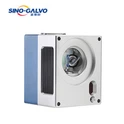


Laser rust removal for car frames has revolutionized the automotive restoration industry, offering a precise, efficient, and environmentally friendly solution to one of the most persistent challenges faced by car enthusiasts and professionals alike. This cutting-edge technology harnesses the power of focused light energy to ablate rust and corrosion from metal surfaces, leaving behind a clean, smooth finish that's ready for further treatment or painting. By eliminating the need for harsh chemicals or abrasive blasting methods, laser rust removal not only preserves the integrity of the underlying metal but also significantly reduces cleanup time and material waste. For car restorers, this innovative approach represents a quantum leap forward in their quest to breathe new life into classic vehicles, making it truly a dream tool in their arsenal.
The Science Behind Laser Rust Removal Technology
How Laser Rust Removal Works?
Laser rust removal operates on the principle of selective photothermolysis. This process involves the absorption of light energy by the rust particles, causing them to heat up rapidly and vaporize. The underlying metal, which has different optical properties, remains largely unaffected by the laser energy. This selective targeting is what makes laser rust removal so effective and precise.
The laser beam is typically pulsed at high frequencies, allowing for controlled energy delivery. As the rust absorbs this energy, it undergoes a process called sublimation, where it transitions directly from a solid to a gaseous state. This vaporized rust is then easily extracted through a built-in vacuum system, leaving behind a clean metal surface.
Advantages Over Traditional Methods
Compared to conventional rust removal techniques like sandblasting or chemical treatments, laser rust removal offers several distinct advantages:
- Precision: Laser beams can be focused with extreme accuracy, allowing for the removal of rust from intricate areas without damaging surrounding materials.
- Non-abrasive: Unlike mechanical methods, lasers don't wear down the base metal, preserving the original dimensions and structural integrity of the car frame.
- Environmentally friendly: The process doesn't require chemicals or produce hazardous waste, making it a more eco-conscious choice.
- Reduced preparation and cleanup: With no media or chemicals involved, setup and post-treatment cleanup are significantly simplified.
- Versatility: Laser systems can be adjusted to treat various types of metals and degrees of rust, offering a flexible solution for diverse restoration needs.
Types of Lasers Used in Rust Removal
Several types of lasers are employed in rust removal applications, each with its own strengths:
- Fiber lasers: Known for their high efficiency and excellent beam quality, fiber lasers are popular for their ability to deliver precise energy over long distances.
- Nd:YAG lasers: These solid-state lasers offer high peak power and are effective for removing thick layers of rust.
- CO2 lasers: While less common for metal applications, CO2 lasers can be useful for certain types of surface treatments.
Implementing Laser Rust Removal in Car Frame Restoration
Preparation and Safety Measures
Before beginning the laser rust removal process, proper preparation and safety measures are crucial:
- Surface cleaning: Remove any loose debris or contaminants from the car frame to ensure optimal laser effectiveness.
- Area isolation: Set up a designated work area to contain any dust or particles generated during the process.
- Personal protective equipment: Operators must wear appropriate PPE, including laser safety goggles, respiratory protection, and protective clothing.
- Ventilation: Ensure adequate ventilation to remove any fumes or particulates produced during rust vaporization.
- Equipment calibration: Properly calibrate the laser system to achieve the desired power output and beam characteristics for the specific application.
Step-by-Step Process of Laser Rust Removal
The laser rust removal process typically follows these steps:
Assessment: Evaluate the extent of rust damage and determine the appropriate laser parameters.
Setup: Position the laser system and adjust focusing optics to achieve the optimal working distance.
Test run: Perform a small-scale test on an inconspicuous area to fine-tune laser settings.
Systematic treatment: Move the laser beam methodically across the rusted areas, ensuring complete coverage.
Progress monitoring: Continuously assess the results and adjust parameters as needed.
Final inspection: Thoroughly examine the treated areas to ensure all rust has been removed.
Post-treatment: Apply any necessary protective coatings or primers to prevent future rust formation.
Challenges and Solutions in Car Frame Restoration
While laser rust removal offers numerous benefits, it's not without its challenges:
- Complex geometries: Car frames often have intricate shapes that can be difficult to access. Solution: Use flexible fiber-optic delivery systems and specialized scanning heads to reach confined spaces.
- Varying rust thickness: Rust may not be uniform across the frame. Solution: Implement adaptive control systems that adjust laser parameters in real-time based on feedback from the treated surface.
- Heat management: Excessive heat can warp thin metal sections. Solution: Employ pulsed laser systems and implement proper cooling strategies to minimize heat buildup.
- Operator skill: Effective use of laser systems requires training and experience. Solution: Invest in comprehensive operator training programs and consider semi-automated systems for consistency.
The Future of Laser Rust Removal in Automotive Restoration
Emerging Technologies and Innovations
The field of laser rust removal is continuously evolving, with several exciting developments on the horizon:
- AI-powered systems: Machine learning algorithms are being developed to optimize laser parameters in real-time, improving efficiency and results.
- Handheld devices: More compact and portable laser systems are emerging, making the technology accessible to smaller workshops and DIY enthusiasts.
- Multi-wavelength lasers: Systems that combine different laser wavelengths promise enhanced versatility in treating various types of rust and surface contaminants.
- Integrated scanning and imaging: Advanced systems are incorporating real-time imaging technologies to provide instant feedback and ensure complete rust removal.
Economic and Environmental Impact
The adoption of laser rust removal technology is poised to have significant economic and environmental implications:
- Reduced restoration costs: By streamlining the rust removal process, laser technology can potentially lower overall restoration expenses.
- Extended vehicle lifespan: More effective rust treatment may contribute to longer-lasting car frames, reducing the need for premature vehicle replacement.
- Decreased environmental footprint: The elimination of chemical treatments and reduction in waste materials aligns with growing environmental consciousness in the automotive industry.
- Job market shifts: As the technology becomes more prevalent, there may be increased demand for skilled laser system operators and technicians in the restoration field.
Integration with Other Restoration Techniques
Laser rust removal is increasingly being integrated with other cutting-edge restoration techniques:
- 3D scanning and modeling: Combining laser rust removal with 3D scanning technology allows for precise mapping of rust damage and more accurate restoration planning.
- Robotic systems: Automated robotic arms equipped with laser heads can tackle large-scale restoration projects with enhanced precision and consistency.
- Additive manufacturing: In cases where rust has caused significant material loss, laser cleaning can be followed by metal 3D printing to rebuild damaged sections.
- Smart coatings: Advanced protective coatings are being developed that work synergistically with laser-cleaned surfaces to provide superior long-term rust prevention.
Conclusion
Laser rust removal has indeed emerged as a restorer's dream tool, offering unparalleled precision, efficiency, and environmental friendliness in the fight against automotive corrosion. As the technology continues to advance, it promises to reshape the landscape of car frame restoration, making it possible to breathe new life into classic vehicles with greater ease and effectiveness than ever before. The integration of laser rust removal with other cutting-edge technologies is opening up new possibilities in the field of automotive preservation, ensuring that cherished vehicles can be enjoyed for generations to come.
For those interested in exploring the potential of laser rust removal technology or seeking high-performance galvo scanners for various industrial applications, Sino-Galvo Tech. stands ready to assist. With our extensive experience in manufacturing galvanometer scanning systems and control systems, we can provide tailored solutions for your specific needs. To learn more about our products and services, including optical scanning mirrors and laser cleaning systems, please don't hesitate to reach out to us at Info@sino-galvo.com.