

There are several ways to steer the laser beam. The most common method is the nanopositioner/piezo translation stage. Due to its large inertia, it can move with high precision but at low speed. Similar galvanometer scanners (or galvanometers for short) can provide high-speed scanning and cheaper solutions, but need to weigh accuracy. In this tutorial, I will summarize the functions that should be paid attention to when choosing a galvanometer scanner (1D or 2D).

What is a galvanometer?
In short, a galvanometer scanner is a high-speed moving mirror. The galvanometer system is mainly composed of three components: motor, mirror and drive board. If users want to control the system with digital signals, then they will include a D/A converter to complete the job. Otherwise, they can use analog control (voltage) to control the movement.
Motor/galvanometer selection
Three important components of the galvanometer: rotor, stator and position detector (PD). The performance of the rotor + stator determines the torque efficiency, and the position detector determines the performance of the system. Here we will not discuss the topic of rotor/stator performance, users should refer to Gerald F. Marshall's "Optical and Laser Scanning Manual" for more information.
PD plays an important role in the performance of the galvanometer. The latest design of PD involves lighting diodes, masks and photodetectors. PD should follow the following specifications:
i) Linearity: How does PD behave as an ideal linear transfer function. Typical value: 99.5%-99.9%
ii) Repeatability: Describe the consistency of the PD when returning to a specific position, the typical value is 1µrad – 8µrad.
iii) Long-term stability (drift): describe the behavior of the system over time and temperature. It is usually described by offset offset (deviation from 0,0 position) and gain offset (deviation between set position and actual position).

Mirror selection
The basic function of the mirror is to accommodate the input laser beam and cover the entire beam of the entire scanning angle. The thickness, size, shape, material and moment of inertia of the reflector play an important role in the performance of the system. Especially when the system is subjected to high acceleration during operation, the rearview mirror must remain rigid, otherwise the speed or accuracy of the system will be impaired. So, what should you pay attention to when looking for a galvanometer?
i) Shape and size: The shape and size of the mirror are usually defined/fixed by the manufacturer, because the adjustment is based on the geometry of the mirror.
ii) Substrate: Commonly used materials are silicon, fused silica, beryllium or silicon carbide. Each material has its own advantages and disadvantages.
iii) Optical coating: Each mirror must be designed and customized according to laser wavelength and laser power. In addition to broadband metal coatings, commonly used laser mirrors also include multiple dielectric layers, which can provide >99% reflectivity. In addition to reflectivity, several parameters should be considered when purchasing a suitable laser mirror. The most important attributes are surface quality, surface flatness and laser damage threshold

Optical surface
Surface Quality
The surface quality of an optical element is described by its surface shape and irregularities. Surface shape is defined as the deviation from flatness to peak-to-valley, including any curvature (also called power) present. When the power is subtracted, the surface irregularities are represented by the peak-to-valley difference. Generally, it can be ensured that the front surface spot at 633 nm is less than λ/10 on the transparent aperture. The typical number on the clear aperture of our 2-inch mirror is λ/4. When the wavefront must be preserved, please select a flatness of λ/10 or better.
As for the surface quality, the smaller the scratch size, the smaller the spread. Our metal mirror can scrape 25-10; our dielectric mirror 15-5; and our ultraviolet reflector 10-5, which is very ideal
For the most demanding laser systems that require low scattering.
Digging: A surface defect of an optical element defined with an average diameter of 1/100 mm.
Scratches: A defect on an optical component whose length is many times larger than its width.
The application of mirror surfaces drives the requirements for surface flatness and surface quality. When the wavefront must be preserved, a λ/10 to λ/20 mirror should be selected. When the wavefront is not as important as cost, λ/2 to λ/5 mirrors can be used. For surface quality, the stricter the scratch mining specification, the smaller the spread. For demanding laser systems, it is best to use 20-10 to 10-5 scratches. For applications where low divergence is not as important as cost, scratches of 40-20 to 60-40 can be used.
Surface Flatness
Figure | Cost | Applications |
λ/2 | Low | Used where wavefront distortion is not as important as cost |
λ/5 | Moderate | Excellent for most general laser and imaging applications where low wavefront performance must be balanced with cost |
λ/10 | Moderate | For laser and imaging applications where low wavefront distortion, especially in systems with multiple elements |
λ/20 | High | For the most demanding laser systems where maintaining accurate wavefront is critical to performance |
Surface Quality
Scratch-Dig | Cost | Applications |
60-40 | Low | Used for low-power laser and imaging applications with unfocused beams where scatter is not critical |
40-20 | Moderate | Ideal for laser and imaging applications with collimated beams where scatter begins to affect system performance |
20-10 | High | Excellent for laser systems with focused beams that can tolerate little scattered light |
10-5 | High | For the most demanding laser systems where low scatter is critical to performance |
Laser damage threshold (LDT)
Generally, the laser damage threshold of the mirror is the specification specified by the manufacturer, and should not exceed this specification, otherwise delamination or burnout may occur (picture below)
Depending on the laser operation mode, the damage mechanism caused by the laser is different. In the case of continuous wave (CW) or quasi-CW operation, damage is usually caused by thermal effects caused by absorption. In the case of pulsed operation, especially for pulse durations in the picosecond or femtosecond range, the damage is caused by dielectric breakdown. Therefore, when evaluating the LDT of a mirror, the following questions must be asked:
1. CW or pulse?
2. What is the power/energy density of the beam (total power/energy divided by 1/e2 area)
3. The length of the laser pulse
4. Laser pulse repetition frequency (prf)
5. Laser beam diameter (1/e2)

Driver board selection
There are not many options for the driver board/server. It can be digital or analog control. The analog server does the job at a lower price, but the adjustment must be performed manually, and is usually coupled with a specific galvanometer. Digital servers are more expensive, but have better performance and more functions.
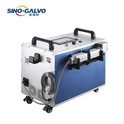
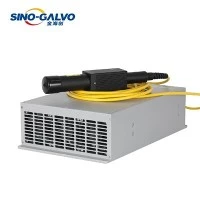
Sino-Galvo Tech. is the leading galvanometer scanner manufacturer. The laser welding machine equiped with our scanner system can reach the heighest precision leavel. Welcome to contact us for further information.
Welcome to consult: +86-18921551023