

What is a power battery?
The power battery is a large-capacity battery specifically designed to provide power output for vehicles and large-scale energy storage equipment. It is different from small consumer batteries such as those used in mobile phones and remote controls. Its core features include high current discharge, high energy, high safety, and long cycle life.
Among them, the most common type of power battery is the vehicle power battery. Its main function is to replace the fuel engine and provide the overall driving power for new energy vehicles. As an energy storage power battery, such as photovoltaic energy storage, power station energy storage, and household energy storage, it can supply power to high-power equipment like ships, construction machinery, and unmanned aircraft.
Power Battery & Welding Technology
Power battery welding is a core process in lithium battery manufacturing, covering the entire process from cell to module to PACK. It directly affects the internal resistance, heat generation, vibration reliability, and risk of thermal runaway of the battery; key requirements: low heat input, extremely low contact resistance, no splashing, reliable sealing, and high consistency in large-scale production.
The 4 main welding processes for power battery
The principle of fiber laser welding is to use a high-energy laser beam to locally melt the metal, with no filler material required and non-contact welding. The heat affected zone is less than 0.1mm, and the accuracy is ±0.02mm.
Among them, infrared optical fibers (1064nm) are suitable for welding materials such as aluminum shells, thick aluminum busbars, and box body seals. Green / blue lasers are suitable for welding copper materials, which can increase the absorption rate of copper materials and solve the problems of pores and cracks in copper-aluminum welding.
The advantages of laser welding are high speed, strong automation, controllable depth and width, ability to weld thick materials, and excellent sealing performance. The applicable scenarios include square cell top cover sealing, busbar busbar, cylindrical full electrode, PACK aluminum box, and water cooling plate.
Ultrasonic welding, medium-frequency resistance spot welding, and electromagnetic pulse welding are also common welding methods for power batteries.
key points for laser welding of power battery
Laser selection and beam control
For high-reflection materials such as aluminum and copper, fiber laser with 1064nm wavelength is preferred, while blue light laser is more suitable for purple copper.
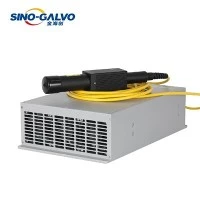
The galvo fiber pulsed laser can be used for welding thin tabs, sealing pins, and explosion-proof valves; the continuous fiber laser can be employed for shell ring welding and thick busbar welding, etc.
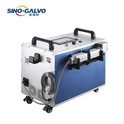
When using the handheld laser welding head for welding, it can reduce the damage to the lens caused by the reflection of aluminum/copper light, widen the molten pool, facilitate the rise of bubbles, and reduce pores.
Optical lens maintenance
Daily inspections of the collimating mirror and focusing mirror should be conducted. If any spots or melting damage are found on the lenses, they should be replaced immediately. The protective gas should continuously blow over the lenses to prevent metal vapor from splashing and adhering. For high-reflection copper-aluminum welding, a back-reflection prevention module must be installed to avoid the reflection light flowing back and damaging the laser resonator.
Focus and defocus quantity specifications
According to different welding conditions, precisely set the amount of defocus to control the welding heat input and penetration depth, and avoid welding defects: for thin plate aluminum shell sealing welding and tab spot welding, a small positive defocus is adopted to prevent the shell from leaking and collapsing, and the tab foil from being burned through; for deep melting welding of copper busbars, a slight negative defocus is used to increase the welding penetration depth. At the same time, it is necessary to do a good job in daily precision control. Every shift must calibrate the focus, and a deviation of 0.1mm in the focus will cause batch false welding and explosion defects.
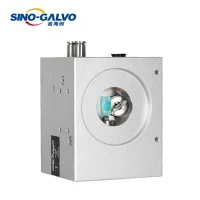
Sino Galvo 6kw High Power Laser Welding Galvanometer HP3830

Fiber laser welding is characterized by concentrated energy, low heat input and high forming accuracy. It is the mainstream process for sealing the aluminum shell of power batteries, copper busbars, multi-layer tabs, sealing pins, etc. The welding process requires matching the defocusing parameters according to the working conditions: for thin aluminum shell sealing welding and tab spot welding, a +0.5 to +2mm positive defocusing is adopted to prevent the backside of the shell from collapsing and the foil from burning through; for deep fusion welding of copper busbars, a 0 to -1mm micro-negative defocusing is selected to increase the penetration depth, and the focus needs to be calibrated every shift. A 0.1mm offset will cause batch false welding and blow-through defects.
The motion welding section benefits greatly from the Sino Galvo high-power galvanometer, which has outstanding advantages. This galvanometer, when combined with visual positioning, can achieve an ultra-high repetition accuracy of ±0.02mm. The optical path runs smoothly without trajectory jitter, and the energy distribution is uniform during high-speed oscillation welding, which can improve the fusion between multiple layers of tabs, reduce the internal resistance of the weld points, and be suitable for long-term continuous operation with high-power fiber lasers. It is resistant to high temperatures and interference from metal smoke dust, effectively reducing weld spatter and porosity defects. For the ring-shaped sealing welding of the aluminum shell, combined with uniform closed-loop motion control, a 3 to 5mm overlapping area is set for arc starting and ending, which can avoid breakage at the beginning and end and gas accumulation problems.
The tooling is equipped with water-cooled fixtures to quickly dissipate heat, reduce the thermal deformation of the shell, avoid high-temperature burns to the cell separator, and the fixture synchronously performs insulation isolation to prevent short-circuiting and breakdown of the welding circuit in the cell. During the production process, high-purity protective gas is used, the cleanliness and assembly gap of the workpiece are strictly controlled, and the laser waveform is adapted to suppress defects such as cracks and pinholes. Relying on the stable high-speed and high-precision processing capability of the Sino Galvo high-power galvanometer, it takes into account the weld seam air tightness, conductive performance and safety of the cell production, and continuously maintains a stable welding yield of power batteries.
HP3830 Welding Applications


Sino Galvo High Power Welding Galvanometer Related Videos