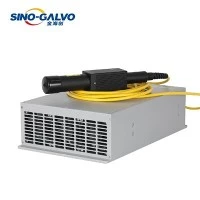


As agricultural mechanization, automation, and intelligent manufacturing continue to advance, the demand for reliable product identification is increasing across the agricultural industry. From complete agricultural machinery and critical mechanical components to agricultural packaging, livestock ear tags, and product traceability, clear and durable markings have become an important part of modern agricultural production and management.
An agricultural laser marking system provides an efficient identification solution through non-contact processing, high precision, permanent marking, and compatibility with various materials. By marking serial numbers, production batches, QR codes, and safety information directly onto product surfaces, manufacturers can improve identification efficiency, strengthen quality traceability, and simplify equipment maintenance and asset management.
Key Advantages of Agricultural Laser Marking Systems
Agricultural machinery and equipment often operate outdoors under challenging conditions, including dust, moisture, vibration, and temperature fluctuations. Therefore, product markings must remain clear and readable throughout the equipment's service life.
Laser marking uses a focused, high-energy-density laser beam to modify a material's surface, creating text, graphics, serial numbers, and QR codes without direct mechanical contact. Compared with conventional labels and ink printing, laser marking does not require additional ink or adhesive labels. With suitable materials and processing parameters, it can produce durable markings with good resistance to wear and environmental exposure.
In agricultural manufacturing, an agricultural laser marking system offers several practical benefits. Permanent serial numbers and QR codes make it easier to identify components and retrieve product information. Production dates, manufacturing batches, product models, and supplier information can also be recorded to support quality management and product traceability.
In addition, laser marking reduces the need for conventional printing consumables and can be integrated into automated production lines for batch processing. Component identification codes can also be connected with maintenance records, making equipment servicing and spare parts management more efficient.
The actual durability, corrosion resistance, and readability of laser markings depend on the material, laser parameters, marking depth, and operating environment. Application testing is recommended before selecting a final marking process.
Types of Laser Marking Equipment for the Agricultural Industry
The agricultural industry involves various materials, including metals, plastics, rubber, and composite materials. Different materials have different laser absorption characteristics and processing requirements. Therefore, selecting an appropriate agricultural laser marking system requires consideration of material compatibility, marking quality, production efficiency, and actual working conditions.
Fiber Laser Marking Machine
Fiber laser marking machines are widely used for marking carbon steel, stainless steel, aluminum alloys, and other metal components. They offer high processing speeds, excellent beam quality, stable operation, and relatively low maintenance requirements.
By adjusting laser power, frequency, and scanning speed, fiber lasers can perform surface marking, deep engraving, and certain metal color marking processes, depending on the material and processing conditions.
Typical agricultural applications include engine components, machinery frames, gears, hydraulic assemblies, metal nameplates, and other parts requiring permanent identification.
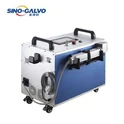
For large agricultural machinery and heavy metal workpieces that are difficult to move, portable fiber laser marking equipment provides greater processing flexibility. The Sino Galvo SC1510-MCH Portable Fiber Laser Marking Machine is designed for flexible marking applications where conventional fixed workstations may be inconvenient.
Its handheld scanning configuration allows operators to mark different positions on large equipment and components without moving the entire workpiece to a fixed marking station. It is suitable for applications such as tractor frames, engine housings, agricultural machinery components, metal pipes, and industrial nameplates.
For manufacturers and maintenance teams that need to mark large or stationary metal workpieces, this portable solution provides a practical option for on-site identification.
Learn more about the Sino Galvo SC1510-MCH Portable Fiber Laser Marking Machine.
Dual-Wavelength Laser Marking Machine (1064nm + 450nm)
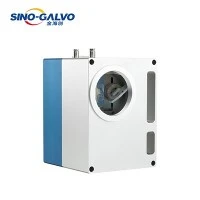
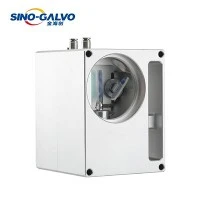
A dual-wavelength laser marking machine combines a 1064nm fiber laser and a 450nm blue laser to address different material processing requirements. With an integrated galvanometer scanning configuration, the system can switch between laser sources through software, providing greater flexibility when marking metal and suitable plastic materials.
The 1064nm fiber laser is primarily used for permanent marking, precision engraving, and certain color marking processes on metals such as stainless steel, aluminum, and copper.
The 450nm blue laser offers favorable absorption characteristics for certain plastics, including ABS, PC, and colored acrylic. Under suitable processing conditions, it can help reduce thermal diffusion and improve the definition of characters, patterns, and QR codes while minimizing the risk of surface burning and deformation.
For agricultural machinery manufacturers processing both metal and plastic components, this dual-wavelength solution can reduce the need for separate marking equipment. It is suitable for applications involving metal nameplates, plastic instrument panels, electronic control housings, and metal-plastic assemblies.
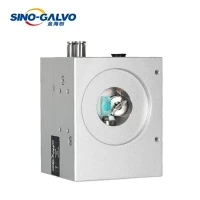
The 450nm blue laser source is also available as an independent laser module. The Sino Galvo 450nm Blue Laser Module provides different power configurations for integration into customized laser marking, engraving, and cutting systems. This offers equipment manufacturers additional flexibility when developing processing solutions for different materials.
When selecting a dual-wavelength configuration, the laser sources, optical components, scanning system, and software must be properly matched to ensure stable operation and consistent marking quality.
UV Laser Marking Machine
UV laser marking machines use a shorter wavelength and generally produce a smaller heat-affected area, making them suitable for fine marking on heat-sensitive materials.
Common applications include plastic housings, electronic components, battery enclosures, and certain glass products. In agricultural machinery manufacturing, UV lasers can be used to mark electronic control modules, plastic instrument panels, wiring harness components, and other precision parts.
For manufacturers requiring fine identification on small components, the Sino Galvo 5W UV Laser Marking Machine provides a solution for marking text, serial numbers, logos, and QR codes on suitable materials.
With a 5W UV laser configuration, it is suitable for applications where fine marking details and controlled thermal effects are important. Depending on the selected optical configuration, different working field sizes can be used to meet specific processing requirements.
This equipment can be considered for agricultural machinery control panels, electronic components, plastic housings, and other products that require precise and readable identification.
Explore the Sino Galvo 5W UV Laser Marking Machine for more product information.
Main Applications of Agricultural Laser Marking Systems
1. Agricultural Machinery and Critical Component Marking
Agricultural machinery manufacturing is one of the major application areas for agricultural laser marking systems. Tractors, harvesters, seeders, and other farming equipment require reliable identification for manufacturing management, quality control, and after-sales service.
Serial numbers, product models, production batches, and QR codes can be marked directly onto machinery frames and bodies. These markings provide unique identification for complete machines and support product traceability throughout their service life.
For critical metal components such as engine blocks, crankshafts, transmissions, hydraulic cylinders, axles, and agricultural cutting tools, laser marking can be used to engrave manufacturing numbers, batch information, and maintenance identifiers. Fiber laser marking is suitable for many metal components, while portable equipment such as the SC1510-MCH provides additional flexibility when marking large machinery or workpieces that are difficult to move.
Plastic components, including machinery housings, instrument panels, electronic control units, battery enclosures, and wiring harness covers, require different marking technologies depending on their material properties.
A 450nm blue laser can be considered for suitable plastics such as ABS, PC, and colored acrylic, while UV laser marking is suitable for fine identification on selected heat-sensitive plastic and electronic components.
For manufacturers processing multiple material types, selecting the appropriate laser source according to the workpiece can improve marking consistency and production flexibility.
Operator control panels, safety warning plates, and equipment specification labels also require clear and durable identification. Manufacturers can choose different laser marking solutions according to the nameplate material and marking requirements.
By applying standardized identification codes to complete machines and critical components, manufacturers can establish more comprehensive product records, supporting quality traceability, after-sales service, and equipment lifecycle management.
2. Livestock Farming and Animal Identification
In livestock farming, animal identification plays an important role in farm management, disease prevention, and agricultural product traceability. Plastic ear tags used for pigs, cattle, sheep, and other livestock can be marked with unique identification numbers, QR codes, and other traceability information through suitable laser marking processes.
Compared with conventional printed markings, properly processed laser markings can offer good resistance to wear, helping maintain the readability of identification information during long-term use.
Livestock farms can use these identification codes to establish individual animal records, including birth dates, breeding batches, vaccination histories, and inspection information. This provides a useful data foundation for animal health management, disease control, and meat product traceability.
During processing, the laser wavelength and parameters must be selected according to the ear tag material. Appropriate process settings help achieve clear markings while minimizing the risk of plastic melting, deformation, or damage to the ear tag structure.

3. Agricultural Supplies and Supporting Equipment Marking
Agricultural supplies, including seed bags, animal feed packaging, fertilizer containers, and pesticide packaging, often require production dates, batch numbers, product models, and traceability information.
An agricultural laser marking system can provide marking solutions for suitable packaging materials, helping manufacturers improve production batch management and product traceability.
For agricultural irrigation systems, components such as irrigation pipe fittings, valves, and drip irrigation accessories can also be marked with identification numbers and product specifications on suitable plastic or metal surfaces. These markings make it easier to identify components during field installation, pipeline maintenance, and asset inventory management.
By applying consistent identification codes to agricultural supplies and irrigation equipment, manufacturers and agricultural operators can improve information management, reduce identification errors, and simplify equipment maintenance.
Choosing the Right Agricultural Laser Marking Solution
Different agricultural applications require different marking technologies. Portable fiber laser marking machines are suitable for large metal components and on-site marking. Dual-wavelength systems combining 1064nm and 450nm laser sources provide greater flexibility for manufacturers processing both metals and suitable plastics. UV laser marking machines are more appropriate for fine marking on selected heat-sensitive materials and electronic components.
Before choosing an agricultural laser marking system, manufacturers should evaluate the workpiece material, marking content, required contrast, production volume, working environment, and integration requirements.
With the right laser source and processing configuration, manufacturers can improve product identification, strengthen traceability, and support more efficient agricultural equipment production and maintenance.