



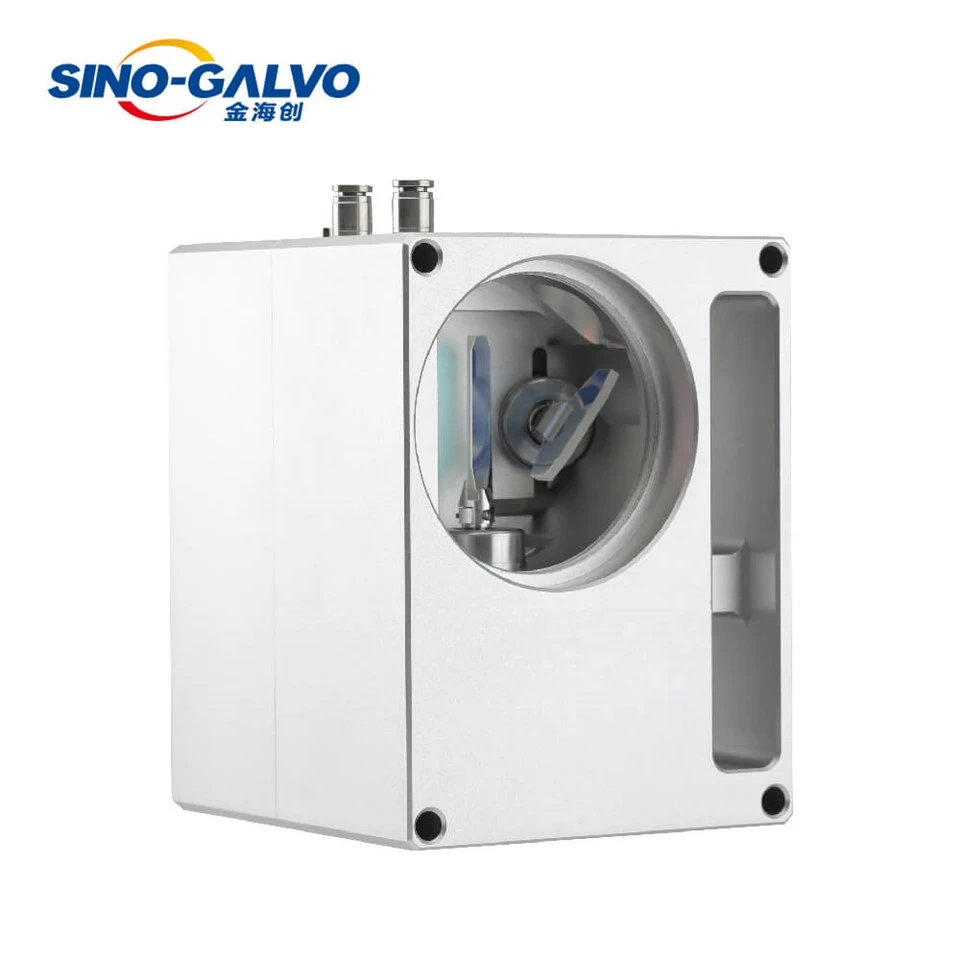


A galvanometer laser scanner is an essential beam-steering component in industrial laser marking, engraving, cutting, and other precision processing systems. It uses galvanometer motors to drive scanning mirrors, directing the laser beam along programmed paths. Its dynamic response, positioning repeatability, and scanning stability directly influence the overall processing performance of the laser system.
Developed by Sino-Galvo, the SG8220-A1 is a 20mm aperture, water-cooled galvanometer laser scanner designed for industrial laser processing applications. It features a moving-magnet motor structure, differential optical position sensing, and an optimized drive system.
With its 20mm optical aperture and dedicated water-cooling design, the SG8220-A1 is suitable for compatible laser systems that require a larger optical aperture and stable scanning operation. It supports multiple laser wavelengths, including 10600nm, 1064nm, and 355nm, with customized optical coatings available for different application requirements.
1. Key Features and Advantages of the SG8220-A1 Galvanometer Laser Scanner
The SG8220-A1 features an integrated aluminum housing with a sealed structural design, providing mechanical protection for internal components. Its water-cooling system helps dissipate heat generated during operation, reducing temperature variations and supporting stable performance during extended processing cycles.
To improve operational reliability, the galvanometer laser scanner incorporates hardware protection functions, including overload, overcurrent, and reverse-polarity protection. Its electromagnetic compatibility design helps maintain signal integrity and reduce the influence of external electrical interference on scanning operation.
For position detection, the SG8220-A1 uses differential optical position sensing to monitor the motor rotor position and provide feedback to the drive system. This feedback mechanism, combined with optimized drive control, supports precise motor positioning and high scanning repeatability.
The motor and drive system are optimized for the load characteristics of 20mm scanning mirrors. High-precision mechanical assembly and drive optimization help improve dynamic response and maintain consistent mirror movement during scanning.
In terms of system integration, the SG8220-A1 supports the industry-standard XY2-100 interface protocol, allowing connection with compatible laser marking and processing controllers. It supports 10600nm, 1064nm, and 355nm laser wavelengths, with customized optical coatings available according to the selected laser source and application requirements.
2. SG8220-A1 Galvanometer Laser Scanner Specifications
The following specifications are measured after 30 minutes of equipment warm-up.
| Parameter | Specification |
| Optical Aperture | 20mm |
| Marking Speed | 1500 mm/s |
| Linearity | 99.9% |
| Repeatability (RMS) | <2 μrad |
| Long-Term Drift (8 Hours) | <0.5 mrad |
| Step Response Time (1% of Full Scale) | 600 μs |
| Tracking Error Time | ≤374 μs |
| Mechanical Scan Angle | ±12.5° |
| Supported Wavelengths | 10600 nm, 1064 nm, 355 nm (custom coatings available) |
| Interface Protocol | XY2-100 |
| Power Supply | ±15 VDC, rated current 5 A |
| Cooling Method | Water cooling; water temperature 25±3°C; flow rate >1 L/min |
| Operating Temperature | 0–45°C |
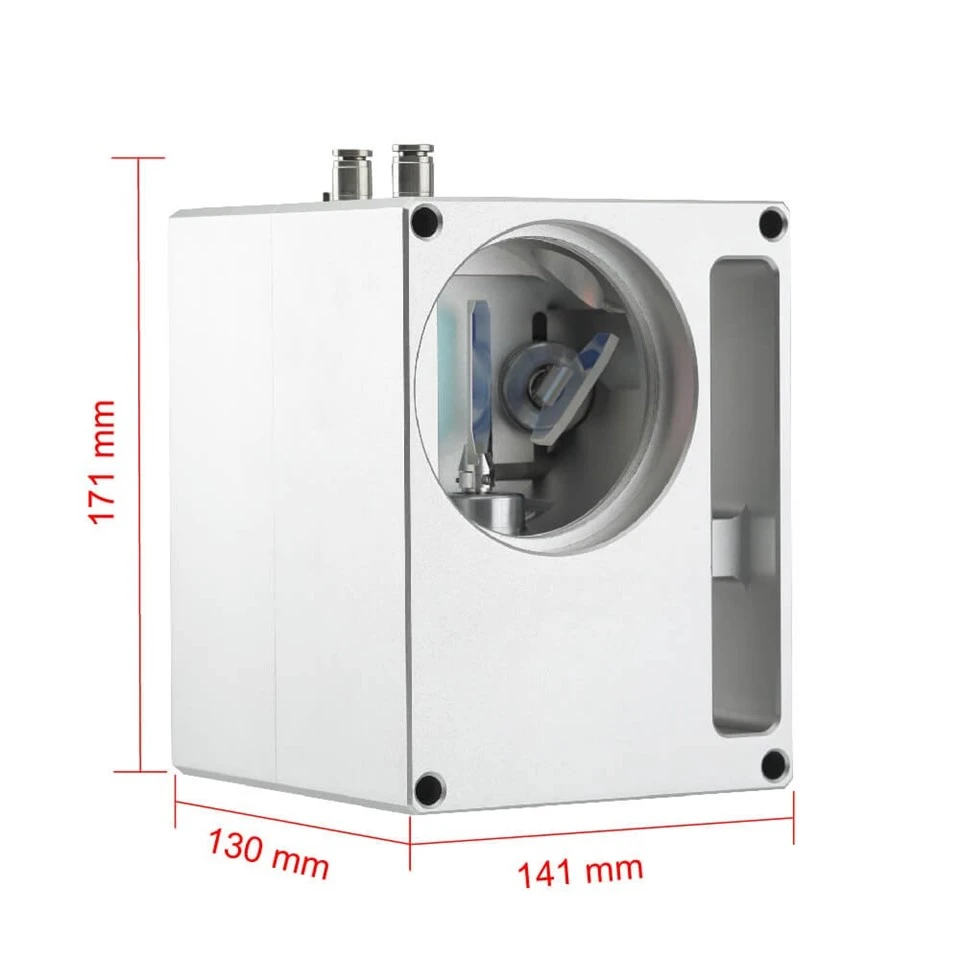
| Dimensions (L × W × H) | 170 × 141 × 130 mm |
| Weight | 4.13 kg |
3. Industrial Applications of the SG8220-A1 Galvanometer Laser Scanner

Precision Electronics Processing
In precision electronics manufacturing, the SG8220-A1 can be integrated into laser processing systems for applications such as FPC flexible circuit board micro-cutting and QR code or serial number marking on electronic components.
Its high positioning repeatability helps maintain consistent scanning paths when processing small patterns. Its dynamic response also supports the scanning requirements of automated production lines. The actual processing results depend on the laser source, optical configuration, material properties, and processing parameters.

Medical Device Processing
When integrated with a compatible 355nm UV laser and optical system, the SG8220-A1 can be used in precision medical device processing applications, including medical tubing micro-cutting and surgical instrument marking.
UV laser processing is suitable for certain applications involving heat-sensitive materials because of its material-dependent absorption characteristics. The galvanometer laser scanner directs the laser beam along programmed paths, providing controlled scanning and repeatable positioning.
However, the actual processing quality and heat-affected zone depend on the laser source, pulse characteristics, optical configuration, material properties, and processing parameters.
Metal 3D Printing
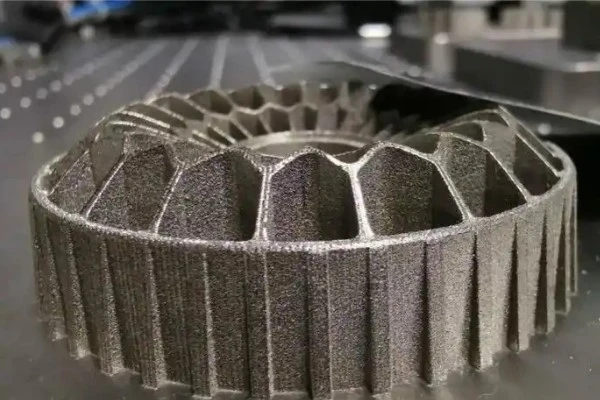
In metal additive manufacturing systems, galvanometer laser scanners direct the laser beam along programmed scanning paths to selectively melt metal powder and build components layer by layer.
The SG8220-A1 may be considered for compatible scanning configurations where its optical aperture, mechanical scan angle, dynamic response, and water-cooling requirements meet the system design specifications.
The final forming accuracy and surface quality are determined by the overall optical system, laser parameters, scanning strategy, powder characteristics, and process control, rather than the galvanometer scanner alone.
4. FAQ
Q: 1: Why does the galvanometer motor oscillate slightly after the system is powered on? How can this be addressed?
A: Slight motor oscillation after startup may be associated with electromagnetic interference, unstable control signals, incorrect wiring, or grounding problems. First, check whether the signal cables are securely connected and properly shielded. Inspect the DB25 connector and grounding connections according to the manufacturer's wiring diagram. If the oscillation persists, further inspection of the control signals and drive system may be required.
Q: 2: Why do marking lines appear wavy or inconsistent?
A: Wavy or inconsistent marking lines may result from unstable position command signals, electromagnetic interference, improper grounding, or problems with the control board and drive system. Begin by checking the equipment grounding and signal cable connections. Then inspect the surrounding electrical environment for potential interference sources. If the problem continues, verify whether the marking controller outputs stable XY2-100 position signals and consult the manufacturer for further diagnosis.
Q: 3: What should be done if the galvanometer laser scanner produces abnormal noise and the motor or driver board becomes excessively hot?
A: Abnormal noise combined with excessive heating may indicate incorrect motor wiring, an electrical fault, mechanical interference, or a loose scanning mirror or mounting fixture. Immediately switch off the power supply and stop operating the equipment. After disconnecting the power, check the motor and driver connections against the manufacturer's wiring diagram. Also verify that the scanning mirrors and mounting fixtures are securely installed. Do not interchange connectors or restart the system until the cause has been identified. If the problem cannot be resolved, contact the manufacturer's technical support team.
5. How to Choose the Right Galvanometer Laser Scanner
Selecting a suitable galvanometer laser scanner requires evaluating the laser source, optical configuration, scanning performance, and specific processing requirements.
The SG8220-A1 features a 20mm optical aperture, making it suitable for laser systems designed around larger beam diameters and compatible optical configurations. However, optical aperture size alone does not determine the processing field or positioning performance. The actual working field is influenced by the mechanical scan angle, F-Theta lens focal length, and overall optical design.
When selecting a galvanometer laser scanner, users should consider the laser wavelength, beam diameter, optical aperture, required scanning field, marking speed, positioning repeatability, and production requirements. Compatibility with the laser source, controller, power supply, and water-cooling system should also be evaluated.
During installation and operation, maintain the specified cooling water temperature and flow rate, follow the manufacturer's wiring instructions, and avoid unauthorized disassembly of the galvanometer laser scanner.
Proper system integration, appropriate operating conditions, and routine maintenance help maintain stable scanning performance and extend equipment service life.
Hot Tags: galvanometer laser scanner: sg8220-a1 20mm aperture, China, suppliers, manufacturers, customized, low price, application of


