In the modern industrial manufacturing system, the cleaning process is a crucial step for ensuring product quality, extending equipment lifespan, and optimizing production processes. Traditional mechanical grinding and chemical solvent cleaning methods, although they can meet basic cleaning needs, have drawbacks such as poor operational flexibility, potential damage to the substrate, environmental pollution, and difficulty in adapting to precision processing. With the iterative upgrade of advanced manufacturing technologies, laser cleaning has emerged as a mainstream technology in high-end manufacturing, precision processing, and surface treatment due to its core advantages of non-contact processing, no chemical pollution, controllable cleaning precision, and strong adaptability, breaking through the limitations of traditional cleaning methods.
In fiber pulsed laser cleaning equipment, single-mode and multi-mode lasers are two key selection options. Due to differences in beam characteristics, energy distribution, and output performance, they are suitable for distinct cleaning scenarios. This article will deeply analyze the core differences, advantages and disadvantages, and industrial applications of single-mode and multi-mode lasers, providing professional references for precise selection in laser cleaning technology.
Core Definitions: The Essential Differences Between Single-mode and Multi-mode Lasers
Laser mode refers to the spatial distribution state of photon energy in the cross-section perpendicular to the propagation direction of the laser, which is a core parameter determining the performance of laser cleaning. It is mainly divided into single-mode and multi-mode types.
Single-mode Laser: High-precision, High-energy-density Gaussian Beam
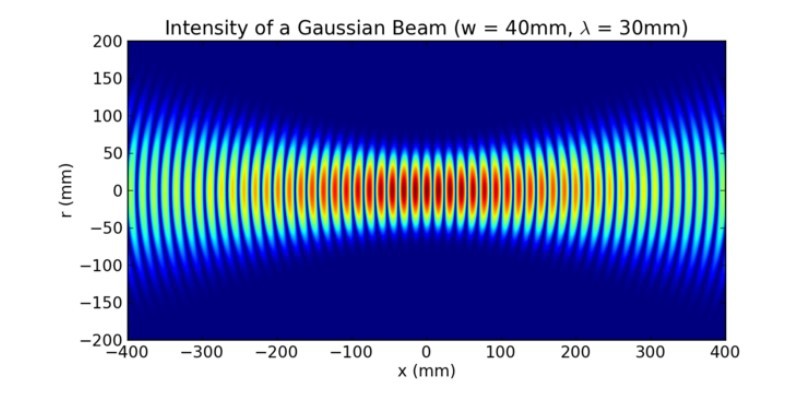
When a single-mode laser operates, it only outputs a single stable laser mode, and its energy distribution follows a standard Gaussian curve - the energy density is highest at the center of the beam and gradually and evenly decreases from the center to the periphery. Therefore, it is also called a fundamental Gaussian beam.
The core characteristics of single-mode lasers are outstanding: excellent beam quality (M² value approaches 1), fine beam diameter, extremely small divergence angle, and energy distribution close to the ideal state. At the same time, it has excellent focusing performance, capable of forming a micron-sized ultra-small spot, with strong mode stability, and can achieve extremely high local energy density, making it an ideal light source for removing strongly adherent contaminants such as rust.
Multi-mode Laser: High Uniformity, High Power Flat-top Beam
The laser output by a multi-mode laser is composed of the superposition of multiple modes of different orders, with a uniform and flat energy distribution in the beam cross-section. The more modes there are, the better the energy uniformity, thus it is called a flat-top beam.
Compared with single-mode lasers, multi-mode lasers have slightly weaker beam quality and a larger divergence angle, requiring a large aperture optical system for transmission, resulting in a larger focused spot size. However, its advantages are also significant: it is easier to achieve high single-pulse energy, high peak power, and high average power output, with a wide energy coverage range and uniform distribution without a central peak. It has irreplaceable advantages in large-area efficient cleaning and substrate damage-free processing scenarios.

Comparison of Advantages and Disadvantages: Performance Differences between Single-Mode and Multi-Mode Laser Cleaning
Single-mode and multi-mode lasers, due to their different beam characteristics, present distinct differences in cleaning effectiveness, substrate compatibility, and application limitations, which are the core basis for industrial selection.
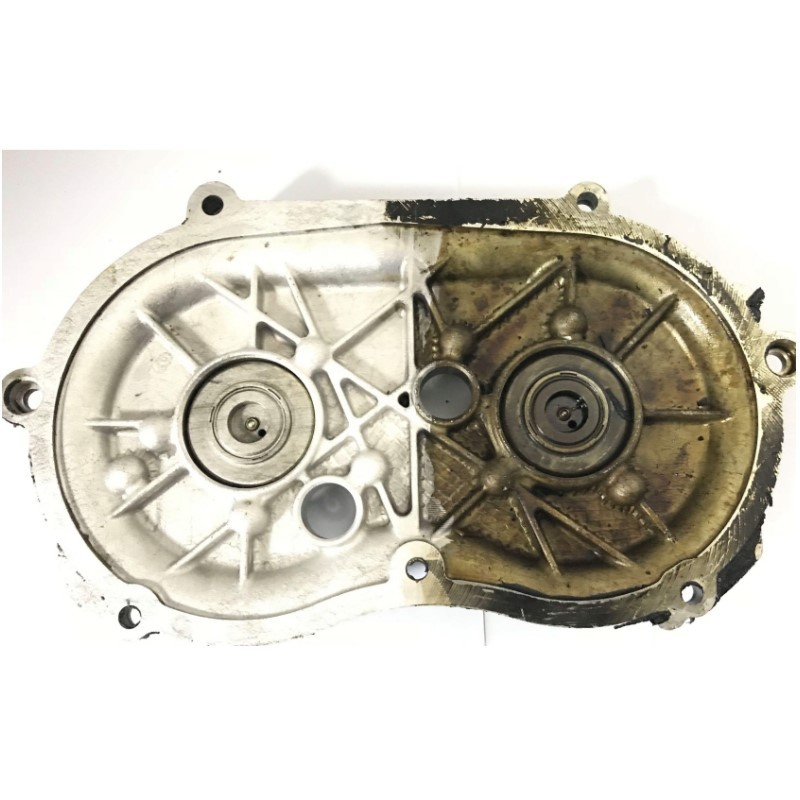
Single-Mode Laser Cleaning: Precise and Intense Removal
Core Advantages: Relying on ultra-high beam quality, extremely small focal spot, and ultra-high energy density, single-mode lasers can easily remove highly adherent and dense contaminants; the thermal input is precisely controllable, with a minimal heat-affected zone, making it perfectly suitable for cleaning thin materials and precision components without causing substrate deformation or overheating damage.
Application Limitations: The energy is overly concentrated at the center of the beam. If the parameters are not properly controlled, it can cause etching or ablation damage to the substrate surface; the small focal spot results in lower efficiency for large-area cleaning, making it more suitable for fine and small-scale cleaning scenarios.

Multi-Mode Laser Cleaning: Efficient and Non-Destructive, Uniformly Compatible
Core Advantages: The flat-top beam has a uniform energy distribution, allowing for precise control of peak power density - above the threshold for contaminant removal and below the substrate tolerance threshold, achieving non-destructive cleaning that "removes only contaminants without damaging the substrate"; the large focal spot and high output power make it significantly more efficient for large-area cleaning than single-mode lasers, making it suitable for high-capacity, non-destructive industrial applications.
Application Limitations: The energy density is lower than that of single-mode lasers, limiting its ability to remove strongly adherent and high-strength contaminants such as rust and oxide scales, making it difficult to achieve deep and fine cleaning.
Applications: Industrial Implementation of Single-Mode & Multi-Mode Lasers
Taking into account the performance characteristics and industrial demands, single-mode and multi-mode laser devices have formed a clear scenario-based application pattern.
Single-mode laser: Precise cleaning, suitable for high-demand precision scenarios
Single-mode laser, with its high energy density, high precision, and low thermal impact, focuses on the removal of strongly adhered contaminants and the processing of precise components. It is the core choice for high-end precision manufacturing.

Strong Rust Removal from Metal Surfaces
For dense rust layers on steel, cast iron, etc., the high energy density of single-mode laser can quickly break the adhesion of the rust layer and efficiently remove the rust.

Precise Cleaning of Weld Oxide
During welding, high temperatures cause the weld and heat-affected zone to form oxide films and impurity precipitates, which directly affect the strength and appearance of the weld.

Non-destructive Cleaning of Precision Components
For aerospace, electronic devices, and other precision thin-walled parts and micro-components, the cleaning requirements must be without deformation and no thermal damage.
Multi-mode laser: Efficient and non-destructive, suitable for large-area general scenarios
Multi-mode laser, with its uniform energy, large light spot, high power, and no damage, focuses on large-area efficient cleaning and scenarios with sensitive substrates. It is the preferred solution for industrial mass production, mold maintenance, and new energy processing.

Non-Destructive Cleaning of Industrial Molds
Mold surfaces may be contaminated with plastic residues, metal debris, and oil stains during production, which directly affect the product forming quality. The multi-mode flat-top beam can gently remove contaminants without damaging the mold cavity or changing the dimensional accuracy.

Edge Cleaning of Perovskite Solar Cells
The edge of thin-film solar cells needs to remove the formed insulation layer to ensure the reliability of subsequent packaging.

Laser Surface Texturing of Material Surfaces
Laser texturing can optimize the roughness of the material surface, improving the adhesion of coatings and welding performance.
Conclusion
Single-mode and multi-mode lasers are the core carriers of the two major directions of laser cleaning technology: "precise and powerful cleaning" and "efficient and non-destructive". Single-mode lasers dominate the fields of precise cleaning and removal of strongly adhered contaminants with their high precision and high energy density; multi-mode lasers lead in large-area efficient cleaning and scenarios where the substrate is sensitive due to their high uniformity, high power, and non-destructive nature.
In the selection of industrial cleaning equipment, there is no need to blindly pursue a single parameter. By precisely matching single-mode or multi-mode lasers based on the type of contaminants, the strength of adhesion, the characteristics of the substrate, and the requirements for cleaning precision and efficiency, an ideal cleaning effect that is efficient, environmentally friendly, and low-cost can be achieved, facilitating the upgrade of industrial manufacturing towards green, precise, and intelligent directions.