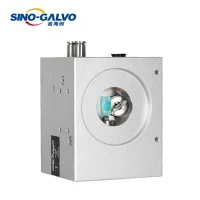


Laser Source Types
There are many types of lasers, which can be divided into solid, gas, liquid, semiconductor and dye types:
(1) Solid-state lasers are generally small and robust, with high pulsed radiation power and a wide range of applications. Such as: Nd: YAG laser. Nd is a rare earth element, YAG stands for yttrium aluminum garnet, and its crystal structure is similar to that of ruby.

(2) Semiconductor lasers are small, lightweight, with long lifespan, and simple in structure, especially useful on aircraft, warships, vehicles, and spacecraft. A semiconductor laser can change the wavelength of a laser by an applied electric field, a magnetic field, a temperature, a pressure, etc., and can directly convert electrical energy into laser energy, so that it develops rapidly.

(3) Gas lasers use gas as a working substance, which has good monochromaticity and coherence. The laser wavelength can reach thousands of kinds and is widely used. The gas laser has a simple structure, low cost and convenient operation. Widely used in industrial and agricultural, medical, precision measurement, holographic technology. Gas lasers have various excitation methods such as electric energy, thermal energy, chemical energy, light energy, and nuclear energy.

(4) Dye laser which use liquid dye as working substance was introduced in 1966 and is widely used in various scientific research fields. There are about 500 dyes that have been found to produce lasers. These dyes can be dissolved in alcohol, benzene, acetone, water or other solutions. They may also be present in solid form in organic plastics, or sublimed into steam, in gaseous form. So dye lasers are also called "liquid lasers". The outstanding feature of dye lasers is that the wavelength is continuously adjustable. A wide variety of fuel lasers, low cost, high efficiency, and comparable output power to gas and solid-state lasers for spectroscopic spectroscopy, photochemistry, medical and agricultural applications.

(5) There are many types of infrared lasers, which have a wide range of applications. It is a new type of infrared radiation source, characterized by high radiation intensity, good monochromaticity, good coherence and strong directionality.

(6) X-ray lasers have important value in scientific research and military, and have advantages in laser anti-missile weapons; bio-based X-ray lasers can study molecular structure in living tissue or understand cell function in detail; use X-ray laser to capture molecular structure In the photo, the contrast of the resulting biomolecular image is high.
(7) Some chemical reactions in chemical lasers produce enough high-energy atoms to release large amounts of energy that can be used to generate laser light.
(8) Lasers such as free electron lasers are more suitable for generating much higher power than other types. Its working mechanism is different. It obtains tens of millions of volts of high-energy-adjusted electron beams from the accelerator. Through the periodic magnetic field, it forms energy levels of different energy states and generates stimulated radiation.
(9) Excimer laser, fiber guided laser, etc.