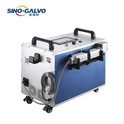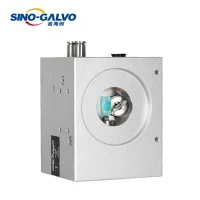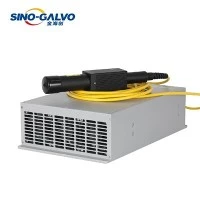


Fiber lasers are already an important equipment in modern society. They are often used in laser cutting, laser welding, etc. If you want to switch to fiber lasers, how much can you save? Users who use fiber lasers in production can save considerable cost, depending on the user's current process, materials, production environment, electrical and labor costs.
The areas where fiber lasers can save are mainly reflected in the following aspects:
1. Higher conversion efficiency: The efficiency of the existing traditional laser technology is not comparable to that of the fiber laser.
2. Cooling: Due to the high efficiency of the fiber laser, the cooling requirements are low and the power consumption is small. Low-power fiber lasers require only air cooling, and high-power fiber lasers are water-cooled, which is simpler and less expensive than other equivalent laser technologies. Cooling also depends on the particularity of the production environment.
3. Consumables/spare parts: Saves spare parts (such as lamps and semiconductor arrays) because fiber lasers use a more efficient design (higher thermal management efficiency) and a carrier-grade single-core pump source Labor and production downtime. This means you don't have to replace the module for the life of the laser. If you use all-solid-state fiber-to-fiber lasers, you'll save even more, so you don't need optical adjustments or maintenance like traditional lasers, such as resonator mirrors, crystals, liquids, and filters.
4. Maintenance: Fiber lasers do not require maintenance or require minimal maintenance, depending on output power and other factors, whereas conventional lasers do not. There is no need to adjust the optics, no warm-up time and consumables/spare parts. This saves you a lot of maintenance costs.
5. Capital cost: A fiber laser can complete cutting, welding, drilling and other operations at the same time, so you don't have to purchase different laser systems separately for different operations, thus reducing your investment cost.