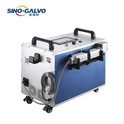


As a new welding process to make up for the shortcomings of traditional welding methods, non-contact laser soldering technology has become an irreversible trend to replace traditional soldering iron welding with its advantages of high precision, high efficiency and high reliability.

Laser soldering is the use of laser thermal effect to complete the melting of tin materials to achieve precise welding processes such as PCB/FPCB for electronic devices. The laser light source for laser welding is mainly a semiconductor light source (808-980nm). The semiconductor light source belongs to the near-infrared waveband, has a good thermal effect, and its beam uniformity and laser energy continuity are significant for uniform heating and rapid heating of the pad, and high welding efficiency.
The welding method of laser soldering
Laser soldering is suitable for various industrial fields. For products of different sizes and shapes, laser can provide a variety of welding methods according to product characteristics.
Wire feed welding
In the laser wire feeding welding process, the laser welding head or product is driven by the 3-axis platform to complete the single-point wire feeding welding or moving wire feeding welding process. Realize the automatic operation of wire feeding and welding process.
Features: dot/ring/ellipse laser; welding spot size can be adjusted by focal length; product can be quickly programmed to switch.

Solder ball soldering
Laser spray tin welding is mainly aimed at solder joints with small solder joints and small heat capacity. The laser spray tin welding method can effectively control the precision of tin quantity and solder joint temperature. Welding generally adopts a 6-axis platform to realize the synchronization of visual photography and welding.
Features: spot laser; welding of precision, small heat capacity products; high welding efficiency.
Solder paste
Solder paste soldering is mainly aimed at soldering small devices, and it is difficult to ensure the consistency of tin amount when using wire feeding for such devices. The welding process generally uses a 3-axis platform to first point the solder paste in laser welding, or a 6-axis platform to achieve simultaneous solder paste welding.
Features: dot/ring/ellipse laser; welding spot size can be adjusted by focal length; precision product welding; product switching can be programmed quickly.
The difference between laser soldering and soldering iron soldering
1. Differences in contact methods
Soldering iron welding generally uses contact welding, which is likely to cause the surface of the product to be scratched. During welding, the soldering iron tip will put a certain pressure on the welding workpiece, causing the solder joint to sharpen, and there is a transmission risk. In contrast, laser welding using non-contact welding can better avoid these risks. It will not cause mechanical damage to the product, and will not cause pressure on the welding components.
2. Adaptability differences
When welding some workpieces with more complicated surfaces, the soldering iron tip and wire feeding device occupy a large space, and the components on the surface of the workpiece are easily interfered with. The laser solder wire feeding device occupies a small space and is not prone to interference. In addition, the spot size of the laser soldering equipment can be automatically adjusted to adapt to various types of solder joints, which can meet the needs of replacing more products, while the traditional soldering machine needs to replace or redesign the soldering iron tip. Therefore, the adaptability of laser soldering is stronger.
3. Differences in the impact on welding components
Soldering iron welding generally uses the whole board to heat, which will undoubtedly have a bad effect on some of the existing thermal components. During the laser soldering process, the laser only heats the part irradiated by the light spot, and the local temperature rises faster and can effectively reduce the impact on the devices around the solder joints.

4. Differences in consumption materials
From the aspect of material saving: soldering iron tips are mostly used to provide the required energy in the soldering iron welding process, but with the aging and wear of the soldering iron tip, the temperature cannot meet the welding requirements, and the soldering iron tip wear caused by contact welding Seriously, the soldering iron tip needs to be cleaned and replaced frequently, which increases the welding cost. In laser welding, the laser is used as the heat source to melt the tin material into the gap of the weldment to connect it, and there is no equipment and consumables to reduce the production cost.
From the perspective of energy saving: because the heating method of the traditional soldering process is the whole plate heating, it will cause more meaningless loss of heat and increase the loss of electric energy; while the local heating of laser welding produces less heat and achieves better energy saving effect.
5. Difference in processing precision
Due to the limitation of the traditional soldering iron welding process and the control method, the wire feeding and welding accuracy are limited; while the laser soldering technology has rapid heating and rapid cooling characteristics, which can make the metal compound produced during welding more uniform and fine, and the mechanics of the solder joint Performance is better. Local heating is more conducive to welding heated components and heat-sensitive components on a circuit board with dense components and solder joints, and can reduce the bridging between solder joints after welding.

6. Differences in safety performance
The non-contact laser soldering method reduces the use of rosin and the residue of combustion-supporting agent, and reduces the generation of harmful smoke, slag, and waste. The laser soldering equipment has been able to accurately control the temperature of the solder joints in real time and prevent burning, and can greatly reduce The difficulty of debugging the welding process reduces the damage to the operator.
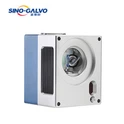
Finally, the galvo scanner system is the key part to the laser welding system. Sino-Galvo Tech. is the leading galvanometer scanner manufacturer. The laser welding machine equiped with our scanner system can reach the heighest precision leavel. Welcome to contact us for further information.
Welcome to consult: +86-18921551023